Acacia seyal
The standard species for flavor encapsulation, confectionery panning, fiber fortification, and tablet binding. Spray-dried powder and agglomerated, conventional and Oregon Tilth certified organic. In US stock.
The standard species for flavor encapsulation, confectionery panning, fiber fortification, and tablet binding. Spray-dried powder and agglomerated, conventional and Oregon Tilth certified organic. In US stock.
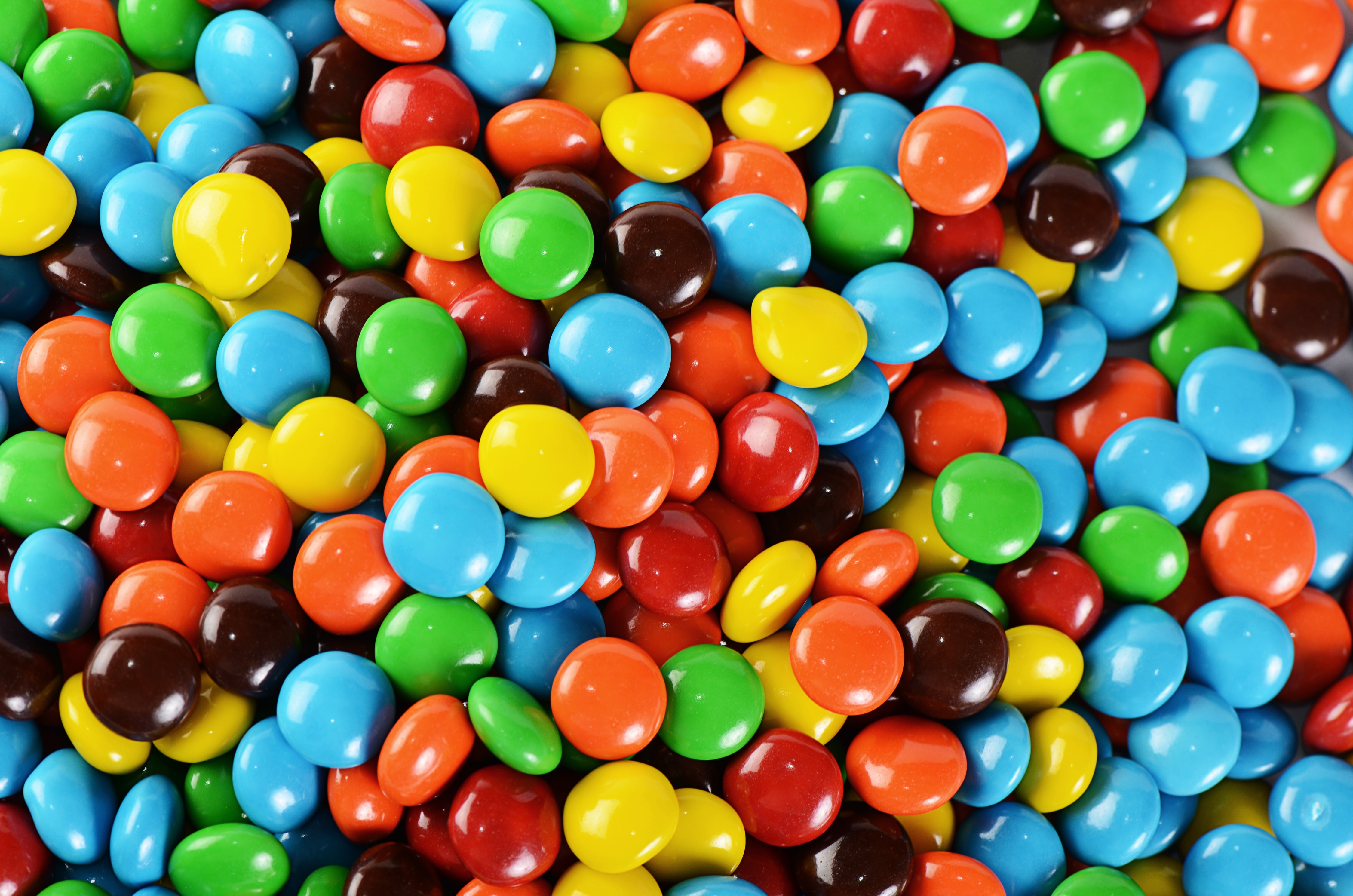
Hard panning with acacia. Seyal is the standard species for confectionery coating.
Acacia seyal is one of two commercially harvested gum acacia species, both native to the Sahel region. The dried exudate is cleaned and spray-dried into a fine, free-flowing powder, or further agglomerated for improved flow and reduced dust. PAT stocks both forms in conventional and Oregon Tilth NOP certified organic grades, in US warehouses, with full lot documentation.
The functional profile of seyal sits in the polysaccharide fraction. Seyal carries a higher total polysaccharide load and a lower arabinogalactan-protein (AGP) content than Acacia senegal. The practical effect: lower viscosity at high solids, which enables higher feed-emulsion loads in spray drying and a cost-effective price point for fiber and binding applications where interfacial activity is not the primary requirement.
The trade-off goes the other direction for emulsion work. Senegal is the preferred species for beverage emulsion concentrates, cannabis nano-emulsion, and any application where droplet stability is load-bearing. Both species are gum acacia under INS 414 / E414 and are used interchangeably by name in some regulatory contexts.
For a side-by-side view of which species each application calls for, the grade guide lists 84 formats with the species, form and color sensitivity for each.
Spray-dried encapsulation typically uses gum on oil at 30 to 50 percent by weight. Seyal's lower viscosity at high solids gives more headroom on feed-emulsion load, which translates to higher throughput and lower cost per kilogram of encapsulated flavor. The dried film around each droplet carries the oxygen-barrier protection that extends flavor shelf life. See our flavor encapsulation article for the full breakdown.
Seyal is the industry-standard species for panning, used at 35 to 45 percent in the panning syrup. Lower viscosity at high solids allows higher gum loads per coat, and the film bonds into the sugar matrix as subsequent layers build. PAT stocks seyal in conventional spray-dried and agglomerated grades, plus an Oregon Tilth NOP certified organic spray-dried grade, for confectionery panning and coating. See our confectionery article for the grade and mechanism breakdown.
Acacia fiber qualifies as a dietary fiber under FDA 21 CFR 101.9. More than 90 percent soluble fiber, neutral taste, no viscosity impact at typical fiber addition levels, selectively fermented by beneficial gut bacteria. Seyal is the cost-effective default for fiber-fortification applications where emulsification is not required.
Acacia provides binding strength with controlled disintegration profiles in both wet granulation and direct compression. The cost-effective price point relative to senegal matters in supplement formulas where the gum acacia is doing binding work rather than emulsification. See our tablet binding article for grade selection and use levels.
Seyal restores body and mouthfeel in non-alcoholic aperitifs, NA spirits, low- and no-alcohol beer alternatives, and reduced-sugar beverages where the formulation has lost the viscosity contribution that alcohol or sugar normally provides. Contributes weight and roundness without measurable haze. See our mouthfeel article.
PAT stocks seyal in US warehouses, conventional and certified organic, with full lot documentation.
Request a Sample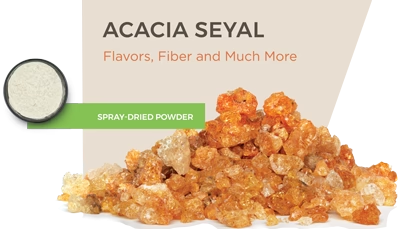
Fine, free-flowing powder for fast dissolution and direct addition to aqueous phases. Available conventional and Oregon Tilth certified organic.
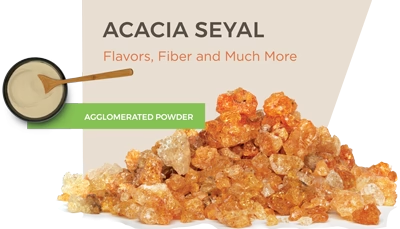
Larger particle size, improved flowability, reduced dustiness. Preferred for large-volume dry-handling and dust-sensitive operations. Available conventional and Oregon Tilth certified organic.
CoA and SDS ship with every order. The full regulatory pack (manufacturer spec sheet, allergen and GMO statements, Kosher and Halal certificates, country of origin, and the manufacturer's FSSC 22000 audit) is available on request through PAT's regulatory team. For Oregon Tilth certified organic grades, the NOP organic certificate ships with the lot. PAT's organic certification is documented at organic gum acacia sourcing.
Both are commercially harvested gum acacia species native to the Sahel region. The functional difference is the arabinogalactan-protein (AGP) fraction. Acacia seyal carries a higher total polysaccharide fraction and a lower AGP load. The practical effect is lower viscosity at high solids, which enables higher feed-emulsion loads in spray drying, and a cost-effective price point for fiber and binding applications. Acacia senegal carries a higher AGP content, which gives it stronger interfacial activity and makes it the preferred species for beverage emulsion and cannabis nano-emulsion work.
Spray-dried flavor encapsulation requires a carrier that can be loaded at high solids in the feed emulsion (typically 30 to 50 percent gum on oil weight) without the slurry becoming too viscous to atomize cleanly. Seyal's lower viscosity at high solids gives it more headroom on the feed-emulsion load, which translates directly to higher throughput and lower cost per kilogram of encapsulated flavor. The film that forms around each oil droplet during drying carries the oxygen-barrier protection that extends flavor shelf life.
Panning shells are built from many thin syrup coats applied at 35 to 45 percent gum solids on rotating cores. Seyal's lower viscosity at high solids allows higher gum loads per coat without atomization or pumping issues, which means faster shell build. The seyal film bonds into the sugar matrix as subsequent coats apply, which is the failure mode senegal struggles with on a hydrophilic sugar substrate.
PAT stocks seyal in conventional spray-dried and agglomerated grades, plus an Oregon Tilth NOP certified organic spray-dried grade, for confectionery panning and coating. See our confectionery article for the grade and mechanism breakdown.
Yes. Acacia seyal is the standard gum acacia grade for tablet and capsule binding in dietary supplements and pharmaceutical compounding. It provides binding strength with controlled disintegration profiles and works in both wet granulation and direct compression. The cost-effective price point relative to senegal matters in supplement formulas where the gum acacia is doing binding work rather than emulsification.
Yes. Acacia seyal qualifies as a dietary fiber under FDA 21 CFR 101.9, meeting the criteria for isolated or synthetic non-digestible soluble fiber with demonstrated physiological effects. It is more than 90 percent soluble dietary fiber by weight and is selectively fermented by Bifidobacterium and Lactobacillus in the colon. The fiber claim applies to both species, but Acacia seyal is the cost-effective default for fiber-fortification applications where emulsification is not required.
Spray-dried powder (fine, free-flowing, fast dissolution) and agglomerated (larger particle size, improved flow, reduced dust). Both forms are available in conventional and Oregon Tilth NOP certified organic grades. All grades ship from US warehouses with lot-specific documentation.
Acacia seyal is native to the Sahel region and is harvested from wild and managed stands. PAT sources through a long-standing relationship with a German manufacturer. The acacia is cleaned, dissolved, spray-dried, and packaged at FSSC 22000 certified facilities in Germany before shipping to US warehouses. That processing is the substantial transformation that sets country of origin, so the country of origin of PAT's gum acacia is Germany.
Lot-specific CoA, manufacturer spec sheet, SDS, allergen statement, Non-GMO statement, Kosher and Halal certificates, country of origin statement, and the manufacturer's FSSC 22000 audit certificate. For Oregon Tilth certified organic grades, the NOP organic certificate ships with the lot. Full documentation pack on request.
Yes. Seyal is the preferred gum acacia for body and mouthfeel applications in non-alcoholic aperitifs, NA spirits, low- and no-alcohol beer alternatives, and reduced-sugar beverages where the formulation has lost the viscosity contribution that alcohol or sugar normally provides. At low use levels, seyal contributes weight and roundness without measurable haze or off-flavor.
Gum arabic, gum acacia, acacia gum, and acacia fiber are the same ingredient class, encompassing both Acacia senegal and Acacia seyal. The terms are used interchangeably in regulatory documents (INS 414 / E414), trade, and formulator literature.
"Acacia fiber" is the common label name on US supplement and functional-food products since FDA recognized the material as a dietary fiber under 21 CFR 101.9, and is the term many purchasing agents use on procurement specs. When a spec calls for "gum arabic" without naming the species, the buyer typically wants Acacia senegal for emulsification work and Acacia seyal for encapsulation, fiber, and binding work.
The other commercial gum acacia species. Higher AGP, stronger interfacial activity. Preferred for beverage emulsion, cannabis nano-emulsion, and hard-texture molded confectionery.
Acacia senegal →Spray-dried coconut MCT and sunflower oil powders carried on a gum acacia matrix. US-made. Many supplement formulators use Acacia seyal alongside oil powders in fiber-and-fat formulations.
Oil Powders →Overview, species comparison, and grade selection across both Acacia senegal and Acacia seyal.
Gum Acacia overview →Organic grades certified by Oregon Tilth NOP. Manufacturer certified to FSSC 22000. Kosher and Halal documentation per lot. Non-GMO.