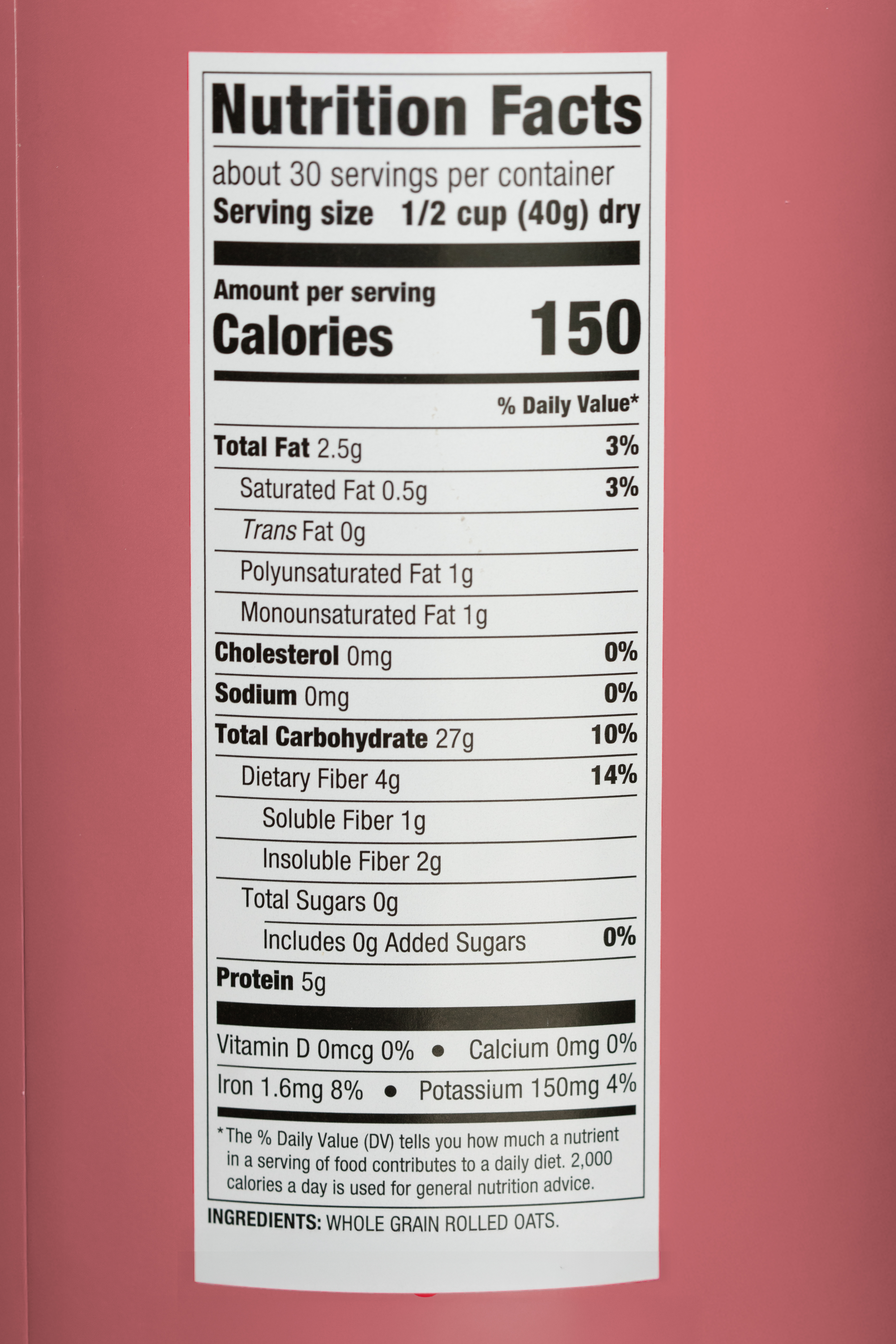
In 2016, FDA updated the Nutrition Facts label requirements and revised the definition of dietary fiber. The change had practical implications for ingredient suppliers and food manufacturers: not all non-digestible carbohydrates automatically qualify for the Dietary Fiber line on the Nutrition Facts panel anymore.
Gum acacia does.
The 2016 FDA dietary fiber definition
Under FDA's current rules, dietary fiber includes non-digestible soluble and insoluble carbohydrates, and lignin, that have physiologically beneficial effects in humans. The rule created two pathways for an ingredient to qualify as dietary fiber on the Nutrition Facts panel.
The first pathway is the "naturally occurring" category: fiber that is inherent and intact in whole foods (intact oats, whole wheat, etc.) qualifies automatically.
The second pathway is for isolated or synthetic non-digestible carbohydrates. These count as dietary fiber only once FDA has determined they have a beneficial physiological effect on human health. Seven are named in the regulation itself, 21 CFR 101.9(c)(6)(i): beta-glucan soluble fiber, psyllium husk, cellulose, guar gum, pectin, locust bean gum and hydroxypropylmethylcellulose (HPMC).
FDA's December 2021 determination on gum acacia
FDA determined on December 17, 2021 that gum acacia meets its definition of dietary fiber. The agency granted a citizen petition on evidence that acacia reduces blood glucose and insulin response when eaten with a carbohydrate-containing meal, and said it intends to propose adding acacia to the list in 21 CFR 101.9(c)(6)(i).
That rule has not been issued yet, so gum acacia is not among the seven fibers named in the regulation. Until the rulemaking is finished, FDA has said it will exercise enforcement discretion, which lets manufacturers count gum acacia toward the Dietary Fiber line now.
For a manufacturer, that means gum acacia can be declared as dietary fiber today without a petition or a separate showing of physiological benefit. Acacia is one of eleven fibers in this position, along with inulin, polydextrose, resistant maltodextrin and others. FDA keeps the current list on its Questions and Answers on Dietary Fiber page.
What this means for the Nutrition Facts label
If your product contains gum acacia, the gum acacia content counts toward the Dietary Fiber line on the Nutrition Facts panel. Gum acacia is roughly 90% dietary fiber on a dry basis, so 10 g of gum acacia per serving contributes about 9 g of dietary fiber. A beverage with 5 g of gum acacia per 12 fl oz serving, about 4.5 g of fiber, can claim "good source of fiber" (10–19% Daily Value) under FDA's content claim rules.
This is a labeling classification, not a health claim. No additional substantiation or FDA notification is required to make the fiber content declaration based on gum acacia content.
GRAS status
Gum acacia is GRAS under 21 CFR 184.1330, with maximum use levels by food category measured in the food as served: 2.0% in nonalcoholic beverages, 1.0% in most other foods, and higher in confections and candy (12.4% in confections, 46.5% in hard candy, 85% in soft candy).
21 CFR 172.780 permits higher levels in grain-based bars (35%), breakfast cereals (6%), baked goods (3%), soups (2.5%) and alcoholic beverages (20%), and lists dietary fiber as a permitted function. Dietary supplements are outside both regulations. The GRAS status is separate from the dietary fiber determination.
Label naming options
FDA allows gum acacia to be labeled as "gum arabic," "acacia gum," or "gum acacia" on ingredient declarations. All three names refer to the same ingredient and are acceptable.
"Acacia fiber" is increasingly used as a consumer-friendly alternate name, particularly in supplement and functional food contexts. This name is generally acceptable under FDA's common or usual name standard, though food manufacturers should confirm with their regulatory counsel before using it on regulated labels, as FDA has not issued specific guidance on "acacia fiber" as an approved alternate name.
Both species qualify
Acacia senegal and Acacia seyal both qualify as gum acacia under FDA's classification. The dietary fiber designation applies to both species. Either can be used for fiber labeling purposes on the Nutrition Facts panel.
Health claims vs. fiber labeling
There's a distinction between labeling fiber content and making health claims. The FDA dietary fiber classification allows manufacturers to count gum acacia toward the Dietary Fiber line on the panel. That's a nutritional fact declaration.
A separate question is whether a manufacturer can make structure/function or health claims about that fiber: statements like "supports digestive health" or "promotes regularity." These claims require separate substantiation under FDA's supplement and food labeling rules. The dietary fiber classification doesn't authorize those claims automatically. The prebiotic research base for gum acacia does support structure/function claims with appropriate substantiation, but that's a distinct process from Nutrition Facts labeling.
Practical implication
For manufacturers building fiber-forward products, acacia fiber is one of the cleanest fiber sources available under current FDA rules. FDA counts it as dietary fiber, it's GRAS, it's fully soluble, it's flavor-neutral at most use levels, and it carries a recognizable ingredient name.
Grade guidance for fiber-fortified products
Both senegal and seyal species qualify for FDA dietary fiber labeling. Conventional and Oregon Tilth certified organic grades available. Technical documentation available on request. For pack sizes, order volumes and current stock, see the bulk fiber supply page.
Request a Sample