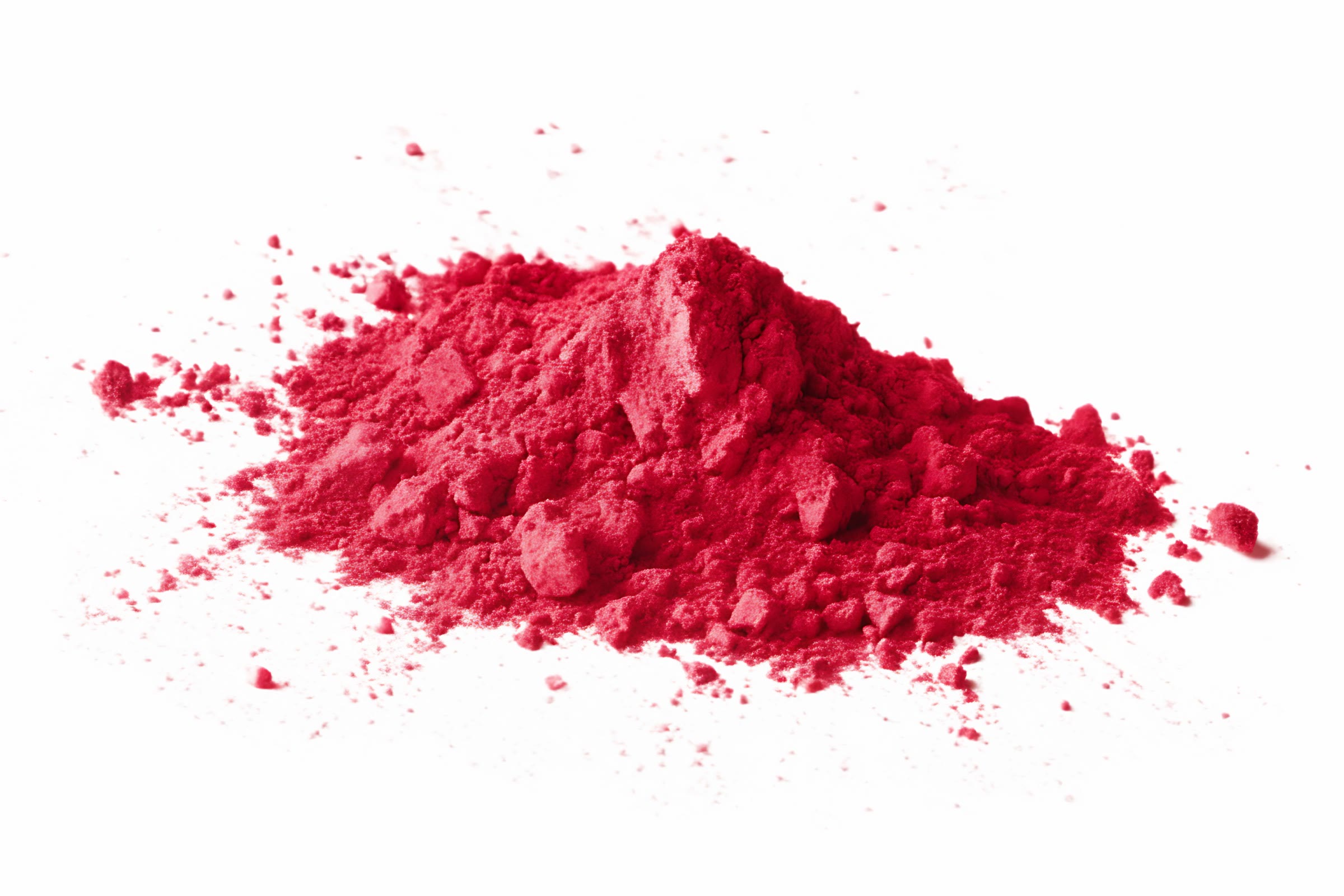
A heap of crimson red powder on a white surface
Colors exempt from certification

Carmine and cochineal extract

Carmine lake 50% carminic acid in standard and high-temperature grades, and water-soluble carmine 50%. A red that holds from pH 2.5 to 8 through heat, light and acid. Evaluation samples available now. Annatto and purple corn on request.

Request a Sample
Three grades, one source.

We work directly with the producer and bring the material to the US market ourselves, so the grade, the documentation and the lot history come from one place.

Carmine lake, standard

50% carminic acid, aluminum lake. Insoluble pigment for panned coatings, compound coatings, gummies, chewing gum, tablets and cosmetics where the color has to stay in place.

Carmine lake, high temperature

50% carminic acid, made for bakery, extruded snacks, meat products and anything that sees a hot process. Same declaration as the standard lake.

Carmine, water soluble

50% carminic acid, solubilized. For beverages, syrups, dairy, yogurt, surimi, nectars and anything that has to stay clear or blend into a wet system. No aluminum lake.

Every lot ships with a certificate of analysis stating carminic acid content and moisture. Shelf life is 24 months. A full qualification package is available on request.

Request a Sample

The red that survives the process.

Carmine holds its shade from pH 2.5 to 8.0 and rates well on heat, light and acid stability across that whole range. Anthocyanin reds shift toward blue or gray above roughly pH 4.2, and beet loses to heat and acid. That is why carmine is the working red in candy, dairy, seafood, meat snacks and canned fruit, and why a reformulation away from it usually costs shade, shelf life or both.

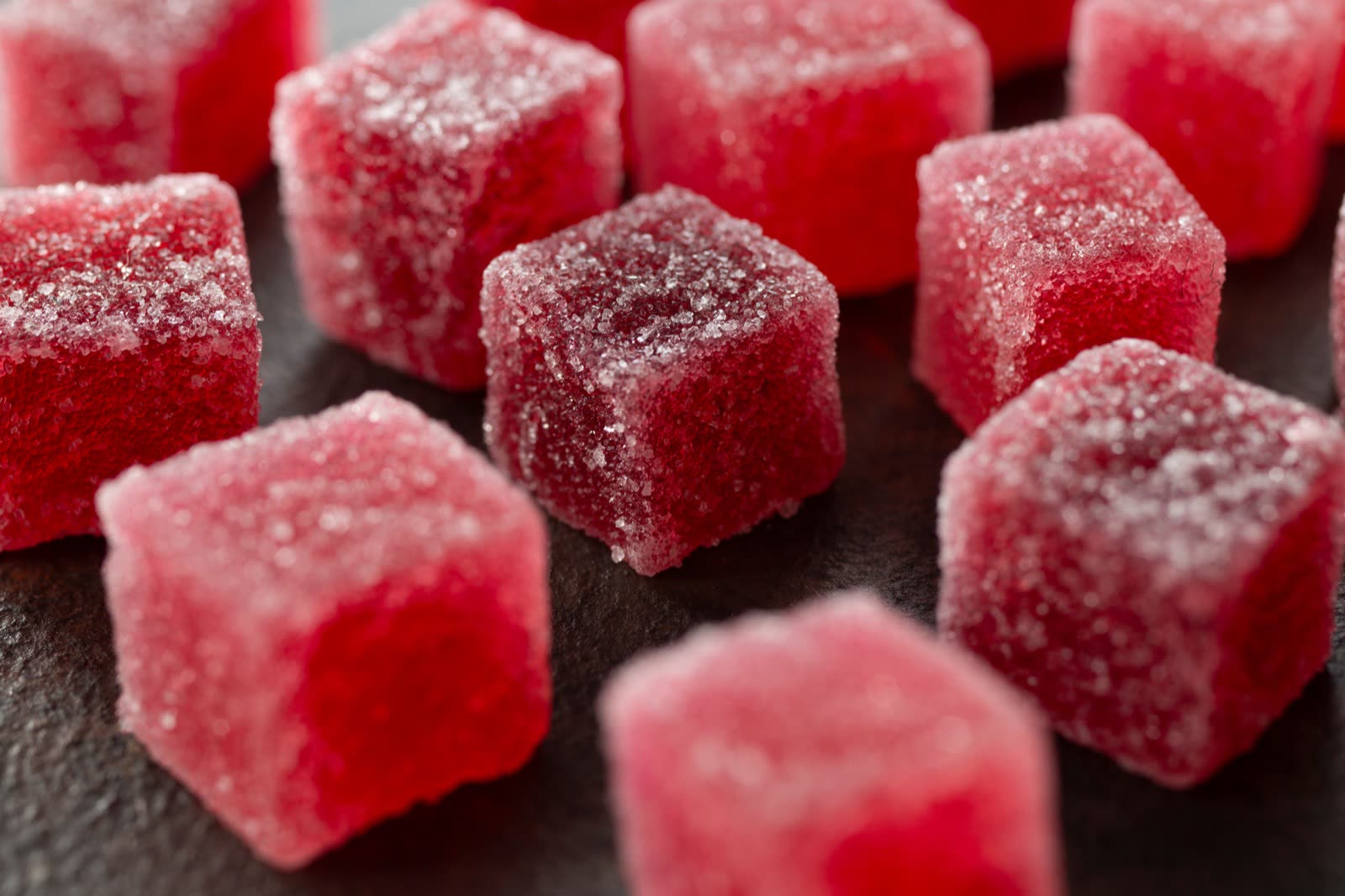
Sugar-dusted red candy cubes on a dark surface

Sugared jelly candy: an acidic, sugar-coated system where the red has to hold through cooking and shelf life.

Confectionery

Panned candy and coated centers, gummies and jellies, hard candy, chewing gum and mints, chocolate and compound coatings.

Dairy, frozen and bakery

Strawberry and cherry yogurt, ice cream and frozen desserts, cheese spreads, fillings, icings and cookies.

Savory, fruit and beverage

Surimi and seafood analogues, meat snacks and sausage, canned fruit and maraschino cherries, nectars and juice drinks, gelatin desserts.

Labeling and regulatory facts.

Declared by name. FDA requires cochineal extract and carmine to be listed as "cochineal extract" or "carmine" on the ingredient statement of foods and cosmetics (21 CFR 73.100). It cannot hide inside "color added."

Exempt from certification. Carmine belongs to the class of colors exempt from certification. The word "natural" is not permitted as a color descriptor on an ingredient statement, so the label reads "carmine" and nothing more.

Not vegan, not mainline kosher. Carmine is insect-derived. For a plant-based or kosher-certified product, annatto or purple corn are the colors to evaluate instead. We can source both from the same region.

Lake versus water soluble. The lake grades carry aluminum as part of the pigment. Where an aluminum-free specification applies, the water-soluble grade is the starting point.

Codes. CAS 1390-65-4, INS 120, E120, Color Index 75470.

Other colors we can supply.

Annatto and purple corn come from the same producer, and we can bring both in alongside carmine.

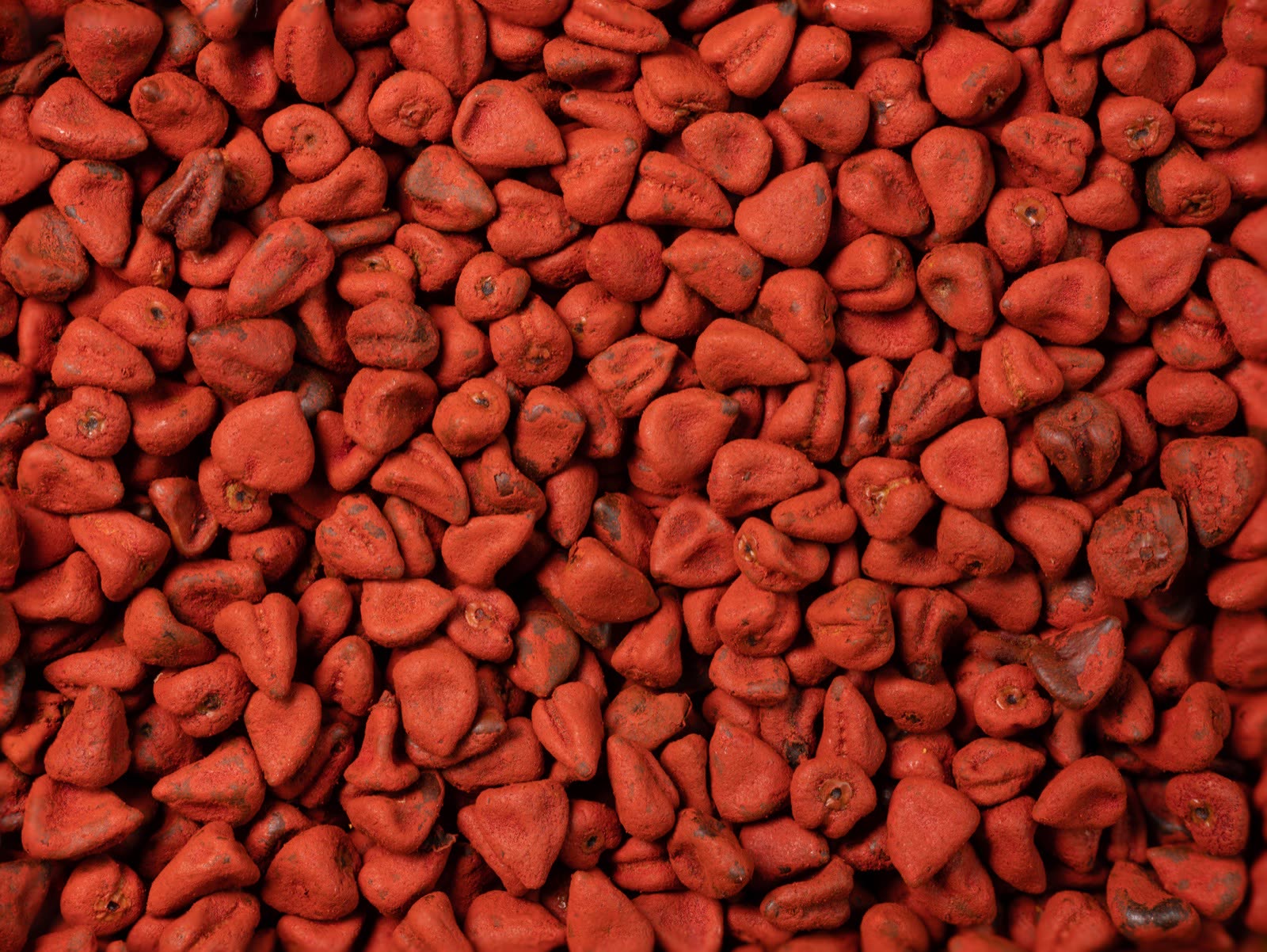
Annatto seeds filling the frame, red-orange and pebble shaped

Annatto seed, the source of bixin and norbixin, the orange to yellow color.

Annatto

Orange to yellow from the seed of the achiote tree. Water-soluble grades work from pH 5 to 8, acid-proof grades from pH 2.5. Good heat stability; light stability is its weak point, so it is not a drop-in for clear packaging. Plant-based.

Purple corn

Anthocyanin red to purple from purple maize. Best in acidic systems below pH 4, where it gives a clean red without any animal-derived ingredient.

Frequently asked

What is the difference between carmine, carminic acid and cochineal extract?

Cochineal extract is the aqueous extract of the dried cochineal insect, with carminic acid as the coloring principle. Carmine is the aluminum lake of carminic acid, an insoluble pigment used where the color has to stay put in a solid or fatty system. Water-soluble carmine is carminic acid brought into solution, usually as an ammonium or sodium salt, for beverages, syrups and anything that has to stay clear. All three are declared by name on a US label under 21 CFR 73.100.

Why is carmine used instead of beet or anthocyanin reds?

Carmine holds its shade from pH 2.5 to 8.0 and survives heat, light and acid. Anthocyanin reds such as black carrot, purple sweet potato, red cabbage and hibiscus shift toward blue or gray above roughly pH 4.2, and beet color loses to heat and acid. For a panned candy, a yogurt, a surimi paste or a canned fruit that is processed hot and sold under light, carmine is the red that stays red.

How does carmine have to be declared on a US label?

By name. FDA requires cochineal extract and carmine to appear as "cochineal extract" or "carmine" on the ingredient statement of foods and cosmetics (21 CFR 73.100). Carmine is a color exempt from certification, and the word "natural" is not permitted as a color descriptor on an ingredient statement.

Is carmine vegan or kosher?

No. Carmine is derived from the cochineal insect, so it is neither vegan nor vegetarian, and it is not accepted by the mainline kosher agencies. For a plant-based product, annatto or purple corn are the colors to look at instead, and we can source both.

What grades and quantities does PAT supply?

Carmine lake standard 50% carminic acid, carmine lake high temperature 50%, and carmine water soluble 50%. Evaluation samples ship from our New Hampshire office. Commercial quantities ship against a purchase order, with a certificate of analysis per lot and a full qualification package on request.

Benching a red right now?

Tell us the application, the pH and the process, and we will send the grade that fits. Samples are available.
Request a Sample →