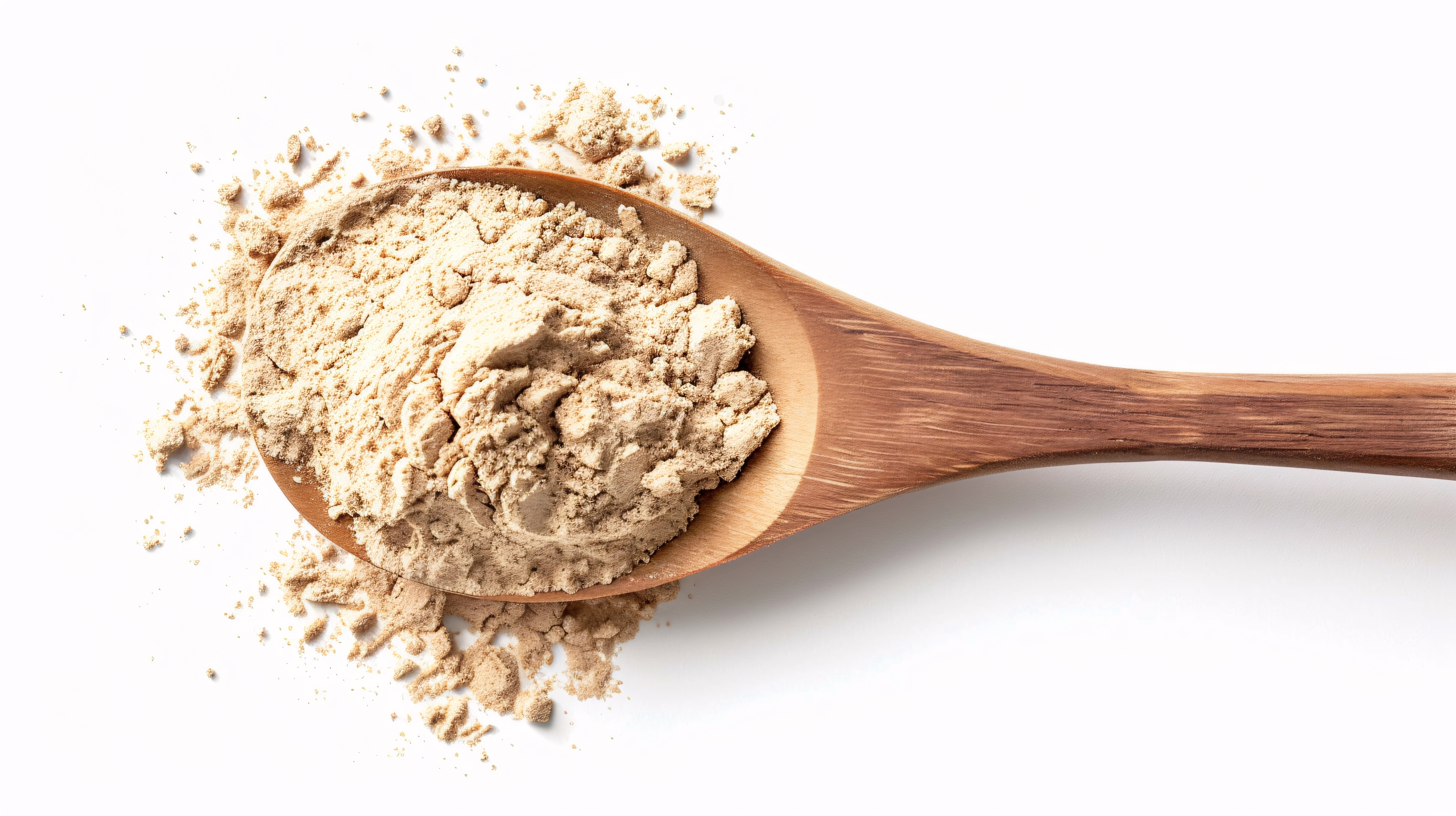
Gum acacia goes by three names depending on who you're talking to: gum acacia, gum arabic, and acacia fiber. They're the same ingredient.
What acacia fiber is, biochemically
Gum acacia is almost entirely soluble dietary fiber. The arabinogalactan polysaccharide backbone resists digestion in the small intestine and passes intact to the colon, where it's fermented by Bifidobacteria and Lactobacillus. The fermentation produces short-chain fatty acids (SCFAs), primarily butyrate, acetate, and propionate. Butyrate is the preferred energy substrate for colonocytes, the cells lining the colon wall.
The practical differentiator: GI tolerance
Most prebiotic fibers cause gastric symptoms at therapeutic doses. Inulin-type fructans (chicory root fiber, FOS, inulin) are effective prebiotics, but doses above 8–10g per day commonly cause gas, bloating, and loose stools.
Acacia fiber doesn't do this. Multiple randomized studies have demonstrated good GI tolerance at doses up to 30g per day, with only mild effects even at high doses in sensitive populations.
Published clinical work
Studies have documented improvements in stool frequency and consistency, selective enrichment of Bifidobacteria and Lactobacillus in the gut microbiota, satiety effects at 10–20g daily doses, and modest blood glucose attenuation at higher doses. Acacia fiber is among the better-studied prebiotic fibers available as a food ingredient.
This also means there's substantiation available for structure/function claims on supplements: "supports digestive health," "prebiotic fiber," and similar language is well-supported by the published literature.
Applications and use rates
Acacia fiber dissolves cold, carries almost no viscosity at use level, and has no flavor of its own, which is why the same grade works in a stick pack, a tablet and a beverage.
RTD beverages: 5–12% by weight. Fully soluble at these levels. No gritty texture, no significant viscosity increase, no flavor contribution at 5–8%. A 12 fl oz serving at 5% delivers about 17g fiber.
Powdered drink mixes: 15–30% of the dry blend. Good powder flowability: acacia fiber powder doesn't clump the way psyllium or inulin-type fibers can at high loadings.
Nutrition bars and snacks: 8–20% by weight. Acts as a mild binder and moisture barrier in addition to contributing fiber. Compatible with most bar matrix systems.
Supplement powders: 20–50% of the blend for products specifically targeting prebiotic or fiber claims. High loadings are feasible because acacia fiber has no off-flavors at elevated concentrations, unlike inulin-type fructans, which turn distinctly sweet and fermented-tasting above about 20% in a blend.
Yogurt and dairy analogs: 3–8% by weight. Adds body without gelation. The "acacia fiber" label declaration reads well in natural and organic dairy positioning.
Grade selection
Both species work for fiber applications. Grade selection is driven by processing requirements: Type 4810 (agglomerated senegal) and Type 4880 (agglomerated seyal) are the fast-hydrating options for RTD beverages and dry-mix sachets where quick dispersion matters. Type 4687 (senegal) and Type 4911 (seyal) are the standard powder forms. Type 4911 and Type 4886 are the Oregon Tilth certified organic grades for products carrying USDA Organic labeling.
Frequently asked
Does acacia fiber cause gas?
Significantly less than most prebiotic fibers. Multiple randomized clinical studies have demonstrated good GI tolerance at doses up to 30g per day, with only mild effects in sensitive populations. Inulin-type fibers (chicory root, FOS) commonly cause gas and bloating above 8–10g daily; acacia fiber does not have the same threshold problem.
Does acacia fiber cause bloating?
Acacia fiber is associated with minimal bloating compared to most prebiotic fiber sources. The slow fermentation rate of its arabinogalactan structure accounts for the better tolerance profile. Clinical studies at 30g/day report only mild GI symptoms even in sensitive populations.
Is acacia fiber soluble or insoluble?
Soluble. Acacia fiber dissolves completely in water, passes through the small intestine intact, and ferments in the colon. It feeds Bifidobacteria and Lactobacillus, producing short-chain fatty acids including butyrate, the primary energy source for colonocytes.
What is acacia fiber?
Acacia fiber is the dried exudate of Acacia senegal and Acacia seyal trees. It is approximately 90% dietary fiber by dry weight. The FDA classifies it as a non-digestible carbohydrate under 21 CFR 101.9. It is also called gum acacia, gum arabic, and acacia gum: the same material under different names.
Is gum acacia gluten-free?
Yes. Gum acacia is a tree exudate with no botanical relationship to wheat, barley, or rye. It is naturally gluten-free, and certified organic grades carry additional documentation confirming allergen absence.
What are the benefits of acacia fiber?
As a prebiotic, acacia fiber feeds beneficial gut bacteria, supports stool regularity, and contributes toward the FDA Daily Value for dietary fiber. Published studies at 10–20g daily doses document satiety effects and modest blood glucose attenuation. It is gluten-free, vegan, Kosher, Halal, and GRAS. The absence of off-flavors or significant viscosity at typical use levels makes it one of the more formulator-friendly fiber sources available.
Grade guidance for fiber applications
Both senegal and seyal grades available, conventional and Oregon Tilth certified organic. Detailed grade guidance is covered in the acacia fiber formulation guide, and the buying side (pack, volume, stock, lead time) is on the bulk fiber supply page.
Request a Sample