Does the emulsion stay liquid, or get dried?
If you are specifying gum arabic for an emulsion, one question decides the species. It is not the oil, the pH, or the droplet size target. It is whether the finished product ships as a liquid or as a powder.
If the emulsion stays liquid, use Acacia senegal. If you spray-dry that same emulsion into a powder, Acacia seyal works well and usually costs less.
That is the whole rule. Flavor emulsion, vitamin emulsion, color emulsion, cannabinoid emulsion: the chemistry is the same in all of them, and the state the finished product ships in is what changes the answer. The line is softer in places than that summary makes it sound.
Not sure which side of the line you are on?
We stock both species, Acacia senegal and Acacia seyal, spray dried and agglomerated, conventional and Oregon Tilth certified organic. Send us the application and whether the product ships wet or dry, and we will tell you which one to trial. Samples ship from US stock.
Request a SampleWhat the gum is doing in a liquid emulsion
An oil droplet suspended in water is not stable. Left alone it will find other droplets, merge with them, and eventually rise into a visible layer. An emulsifier does not remove that tendency. It slows it down enough that the product outlives its shelf life.
Gum acacia does this through the arabinogalactan-protein fraction. It is a minority of the gum by weight and it does most of the interfacial work. The protein portion anchors into the oil, the sugar chains fan out into the water, and the result is a thick physical barrier that keeps two droplets from getting close enough to merge.
Acacia senegal carries more of that fraction than Acacia seyal. That shows up as stronger adsorption at the interface, smaller droplets coming off the homogenizer, and droplets that stay small in the bottle. In a liquid product the gum has to keep doing that job for the life of the product, through warehouse temperature swings and transport, which is why the species with more of the active fraction is the one to specify.
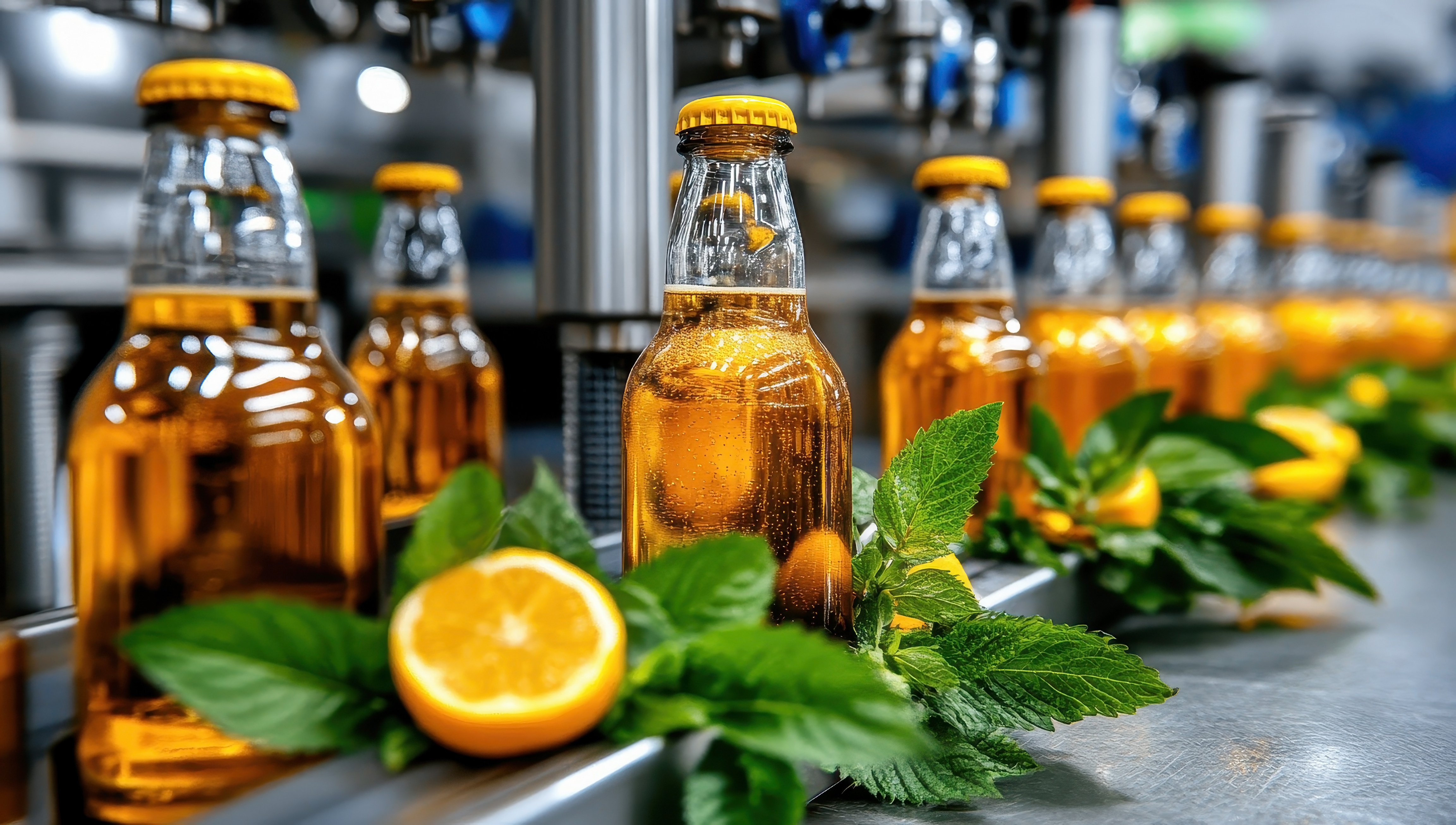
Everything that ships wet sits here. Beverage emulsion concentrates, cloud emulsions, liquid color concentrates, and cannabinoid nano-emulsion premixes sold on to brands. Use levels and the mechanism in more depth are covered in acacia emulsion in beverages.
What changes when you spray-dry it
You still make an emulsion in the feed tank. The emulsion still has to be good. So it seems obvious that the same species logic carries through to the dryer.
It does not, because the dryer changes the job.
Water leaves the droplet in seconds. The continuous phase stops being water and becomes a glassy carbohydrate matrix. The oil droplet inside it is no longer free to move, and coalescence is a transport problem: if nothing can travel, nothing can merge. The instability the gum was fighting in the bottle has been removed by the process itself.
What matters after that is different. The gum has to form a continuous wall around a droplet that is already fixed in place, with low enough oxygen permeability to keep the oil from going rancid on the shelf. That is a bulk polysaccharide property, not an interfacial protein one. Acacia seyal does it well.
There is a second reason seyal suits the dried side. It gives lower solution viscosity at the same solids, so the feed can be run at higher solids without becoming difficult to pump and atomise. Less water per kilogram of finished powder means more throughput and less energy for the same output. The property that makes seyal the weaker emulsifier is the same property that makes it the better carrier.
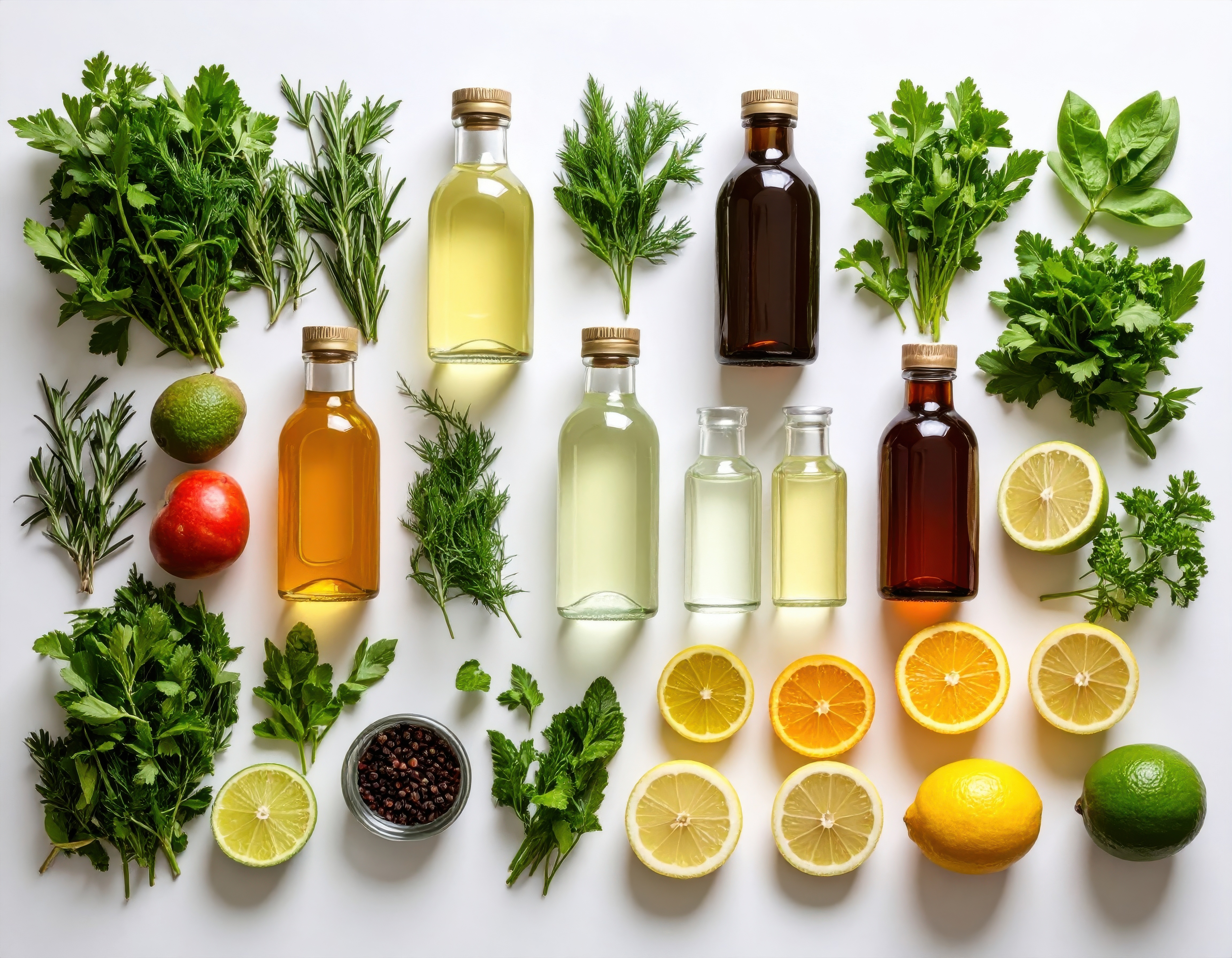
Once the emulsion is spray-dried, the oil droplet is immobilised in a glassy matrix and the gum is acting as wall material.
The test that settles it
Ask what is in the box the customer receives.
If it is a liquid, the emulsion is the product, and the gum has to hold it together for the shelf life. That is senegal.
If it is a powder, the emulsion was an intermediate on the way to something else. You are buying an encapsulation system rather than an emulsion stabilizer, and that is seyal.
The trap is a product that is an emulsion going in and a powder coming out. The word "emulsion" in the specification pulls toward senegal, when what governs is the state the finished product ships in.
The same ingredient, both ways
The clearest way to see it is to take one colorant, one flavor, one vitamin, and follow each one down both routes.
| What you are making | Ships as | Species |
|---|---|---|
| Beverage flavor emulsion concentrate | Liquid | senegal |
| Spray-dried flavor powder | Powder | seyal |
| Liquid color concentrate | Liquid | senegal |
| Spray-dried natural color | Powder | seyal |
| Cannabinoid nano-emulsion premix | Liquid | senegal |
| Water-soluble cannabinoid powder | Powder | seyal |
| Encapsulated oil-soluble vitamin (A, D, E, K, beta-carotene) | Powder | seyal |
| Encapsulated essential oil | Powder | seyal |
| Oil powder on a gum acacia carrier | Powder | seyal |
The emulsification step is identical in every pair. Only the last unit operation differs, and that is what moves the species.
Where the line is softer than it looks
Two cases deserve a second look before you treat the rule as absolute.
The first is a long hold in the feed tank. If the emulsion has to sit for hours before it reaches the dryer, or it is made on one shift and dried on another, it is behaving like a liquid product for that period. The stronger interfacial performance of senegal is doing real work in the tank even though the finished product ships dry.
The second is an unusually tight droplet size target. Where the specification calls for a very small droplet before drying, senegal may be what gets you there, and drying the product afterwards does not change what happened at the homogenizer.
Neither is a reason to specify senegal across an entire dried portfolio.
What it costs to get it wrong
The two errors are not symmetrical.
Specifying senegal for a dried system costs money and nothing else. You pay more per kilogram for interfacial performance the process no longer needs, and you may run a lower-solids feed than the formula could have carried. Nothing fails. The powder is good. It just cost more than it had to, on every batch, indefinitely.
Specifying seyal for a liquid emulsion is the error that shows up later. Ringing at the neck of the bottle, creaming, visible oil separation, and it appears after the product has shipped rather than on the bench.
Verifying the species you received
Both species are sold as gum arabic and both look like a cream-colored powder in the bag, so the specification is only as good as the check behind it.
Specific optical rotation is the definitive test. Acacia seyal is dextrorotatory and returns a positive value. Acacia senegal is levorotatory and returns a negative one. The sign identifies the species on its own, and a blend cannot fake it. Ask for it on the lot certificate of analysis rather than the specification sheet, since the specification describes the grade and the certificate describes what is actually in your warehouse. How it reads on the document is covered in how to read a gum acacia certificate of analysis.
For the species answer on a specific finished product, our gum acacia grade guide works through 84 applications and gives the species, the color sensitivity, and where the agglomerated form is worth specifying.
Frequently asked
I am making an emulsion. Do I need senegal or seyal?
It depends on whether the emulsion stays liquid or gets dried, and that one question settles it. If the finished product ships as a liquid, use Acacia senegal. The gum has to hold every oil droplet in suspension for the shelf life of the product, which is interfacial work driven by the arabinogalactan-protein fraction, and senegal carries more of it. If you spray-dry that same emulsion into a powder, Acacia seyal works well and usually costs less, because once the water is gone the droplet is locked into a glassy matrix and the gum is acting as wall material rather than holding an interface open.
Why does spray drying change which species to use?
Because it changes what the gum is being asked to do. In a liquid, an oil droplet is free to move, find another droplet and coalesce, and the gum has to prevent that for months. In a spray dryer the water leaves in seconds and the continuous phase becomes a glassy carbohydrate matrix. The droplet is immobilised, so coalescence stops being the problem. What matters after that is forming a continuous wall with low oxygen permeability around a droplet that is already fixed in place, and that is a bulk polysaccharide property rather than an interfacial protein one.
Can I still use senegal for a spray-dried encapsulation?
Yes. It works, it is simply more gum than the job needs once the droplet is immobilised, and it costs more per kilogram. There is one case where it earns its place: if the feed emulsion has to hold for a long time before it reaches the dryer, or the droplet size target is unusually tight, the stronger interfacial performance of senegal is doing real work in the feed tank even though the product ships dry. Outside that, seyal is the sensible specification.
Does this rule apply to cannabinoid emulsions?
Yes, and the category splits the same way. A nano-emulsion premix sold on to brands as a liquid is senegal, because the droplets have to stay at their target size in the bottle. A water-soluble cannabinoid powder, where the emulsion is spray-dried, follows the dried rule and runs on seyal. Same cannabinoid, same emulsification step, different species, because the finished products ship in different states.
How do I check which species I actually received?
Ask for specific optical rotation on the certificate of analysis. Acacia seyal is dextrorotatory and returns a positive value. Acacia senegal is levorotatory and returns a negative one. The sign identifies the species on its own and a blend cannot fake it, which makes it the check that settles a question on paper.
Is seyal cheaper than senegal?
Generally yes, per kilogram. There is a second saving on the dried side that is easy to miss: seyal gives lower solution viscosity at the same solids, so a spray-drying feed can be run at higher solids without becoming difficult to pump and atomise. Less water per kilogram of finished powder means more throughput and less energy for the same output.
Grade guidance for emulsion and encapsulation work
Acacia senegal and Acacia seyal, spray dried and agglomerated, conventional and Oregon Tilth certified organic. Tell us whether the product ships wet or dry and we will point to the grade. Samples and technical documentation on request.
Request a Sample