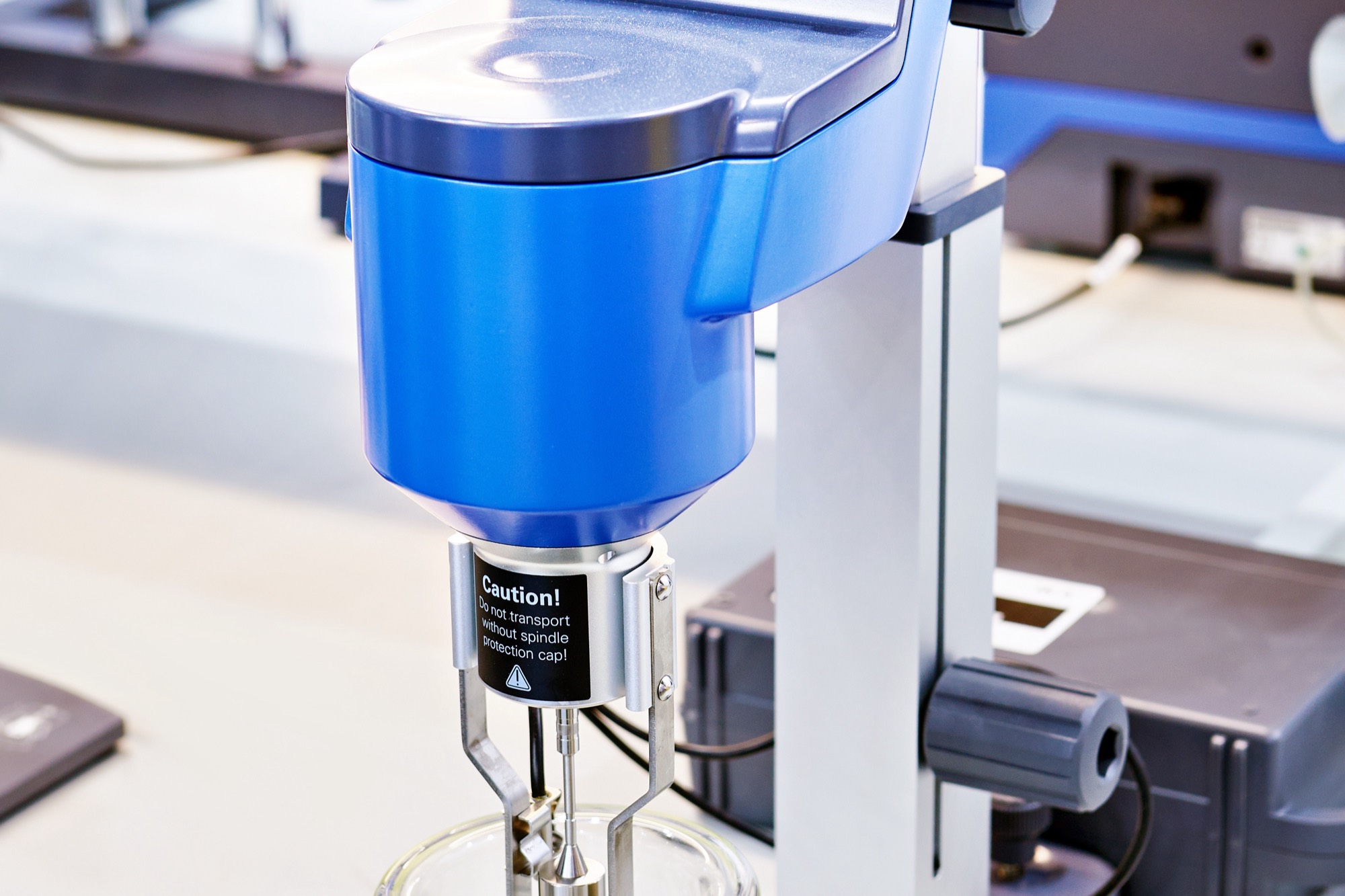
What is the viscosity of gum acacia?
Gum acacia is one of the least viscous hydrocolloids used in food. A 1% solution is close to water. Published figures for a 25% gum arabic solution at room temperature generally fall somewhere in the range of tens to a few hundred centipoise, depending on species, grade, and how the measurement was run. Xanthan gum and guar gum reach four-figure viscosities at around 1% solids, a twenty-fifth of the concentration.
That gap is the reason gum acacia is the standard material for beverage emulsions and spray-dried encapsulation. You can put 30% or more gum into a feed solution and still pump it, atomize it, and dry it. A thickening gum would have turned to paste long before that.
Need the viscosity figure for a specific grade?
Solution viscosity for a given lot is on its certificate of analysis, with the concentration, temperature, spindle and speed it was measured at. We send current specifications and lot COAs with samples, which ship from US stock.
Request a SampleWhy the molecule produces so little viscosity
Gum acacia is a branched arabinogalactan carrying a small protein fraction. The accepted structural picture is a compact, densely branched molecule with blocks of carbohydrate attached along a short polypeptide chain, described in the literature as the wattle blossom model. The arabinogalactan-protein complex is the fraction that does the emulsifying work, and the same compact geometry is why the molecule occupies so little space in solution for its mass.
Viscosity in a polymer solution comes from hydrodynamic volume, the space each molecule sweeps out as it tumbles. Xanthan in solution is a stiff extended helix. Guar is a long linear galactomannan behaving as a random coil. Both sweep large volumes per gram and start interfering with each other at fractions of a percent. Gum acacia molecules are compact spheroids that pack close together without entangling, so solids can climb into the tens of percent before the molecules crowd one another.
Intrinsic viscosity puts a number on the difference. Published values for gum acacia sit in the region of 10 to 25 mL/g. Guar and xanthan run two to three orders of magnitude higher.
Why senegal runs higher than seyal
Acacia senegal typically gives a higher solution viscosity than Acacia seyal at the same concentration. The gap between them is consistent, though both species stay low-viscosity next to any thickening gum.
Molecular weight does not explain it. Published work generally finds seyal has the higher average molecular weight of the two. Seyal molecules are more highly branched and more compact, so they carry more mass in less hydrodynamic volume, and intrinsic viscosity comes out lower. Senegal also carries roughly twice the protein content, and the protein-rich arabinogalactan-protein fraction contributes more viscosity per gram than the bulk polysaccharide does.
Viscosity is rarely what decides between the two species. Senegal is chosen for emulsification, seyal for fiber content, cost, and dry-blend behavior. Where a formula does depend on solution viscosity at a fixed use level, senegal gives more of it per unit of gum, and changing species will move the number.
Concentration does not scale the way you expect
Doubling the gum does not double the viscosity. Below the concentration at which molecules begin to overlap, viscosity rises close to linearly and stays low. Above that point it rises steeply, and small increases in solids produce large increases in viscosity.
For most hydrocolloids the crossover sits well under 1%. For gum acacia it sits somewhere around 20 to 30%. That is why gum arabic behaves like faintly thickened water through the concentrations most finished formulas use, then climbs hard as a spray-dryer feed is concentrated. A measurement at 5% tells you very little about the same gum at 35%. Measure at the concentration you intend to run.
Shear behavior changes with concentration too. Dilute gum acacia solutions are Newtonian, so the viscosity you measure does not depend on how fast you shear them. At high solids the solutions turn shear thinning, and the reading starts to depend on the shear rate the instrument applies.
A viscosity number without its conditions is unusable
Four things have to sit next to a viscosity figure for it to mean anything: solids concentration, temperature, spindle, and rotational speed.
Concentration matters for the reason above. Temperature matters because viscosity falls as temperature rises, and the change is large enough that a reading at 20 °C and a reading at 25 °C are not comparable. Spindle and speed set the shear rate, which changes the answer once the solution is concentrated enough to shear thin. Spindle choice also decides whether the reading sits inside the instrument's reliable torque window. A low-viscosity solution read on an oversized spindle at low speed will produce a number, and the number will be mostly noise.
Two further conditions belong on the record. Gum acacia is an anionic polyelectrolyte through its glucuronic acid groups. Adding acid or dissolved salt screens those charges, the molecule contracts, and viscosity drops. Solutions are near their maximum in the mildly acidic to neutral range and read lower at the pH of a citrus beverage or in hard water. Hydration time counts as well, since a solution measured before the gum is fully dissolved reads low.
Viscosity appears on supplier specifications and on lot certificates of analysis. The food additive monographs for gum arabic, listed as E414 in the EU and INS 414 internationally, deal with identity and purity, so viscosity methods are set supplier by supplier. That is one reason two figures for the same species are not always comparable.
What moves viscosity from lot to lot
Species is the largest single factor. Within a species, four things account for most of the variation.
- Harvest and origin. Tree age, growing region, tapping season, and how long the nodules sat before collection all shift the molecular weight distribution of the gum.
- Molecular weight distribution. Gum acacia is a mixture rather than a single molecule. Two lots with the same average can differ in how much of the high-molecular-weight arabinogalactan-protein fraction they contain, and that fraction carries more viscosity per gram than the rest.
- Processing. Dissolving, filtering, and spray-drying apply heat and shear, both of which can trim molecular weight. Spray-dried gum generally reads a little lower than the kibbled gum it was made from.
- Solution age. Gum acacia solutions lose viscosity slowly over extended storage, so a value measured on day one and a value measured a month later are different measurements.
The practical consequence is that the viscosity on a technical data sheet is a typical value for the grade. The number for the material in your drum is on that lot's COA.
Where viscosity matters and where it does not
It decides the outcome in four places:
- Spray-dryer feed. The infeed has to stay pumpable and atomizable. Viscosity sets the ceiling on solids, and solids set dryer throughput and the payload each capsule can carry.
- Coating and panning syrups. At high solids, syrup viscosity controls how much film goes on per application and how long each layer takes to dry.
- Granulating and tableting binder solutions. Viscosity affects the spray pattern through the nozzle and how evenly the binder distributes through the bed.
- Mouthfeel and body in beverages, at use levels of a few percent and up. Gum acacia adds body without the ropy texture a thickening gum gives at the same perceived weight.
It is a minor factor in emulsion stability. Gum acacia works at the interface: the arabinogalactan-protein fraction anchors to the oil droplet and the carbohydrate arms hold droplets apart. Continuous-phase viscosity does slow creaming, but at the 0.3 to 1% use levels typical of a finished beverage, gum acacia contributes almost nothing to the viscosity of the drink. A senegal grade that emulsifies well does so because of its arabinogalactan-protein content, and viscosity is a loose proxy for that at best.
It does not enter the picture at all where the gum is never asked to thicken anything: dry blends, stick packs, fiber enrichment, and dry tablet binding.
If you need the measured viscosity for a specific grade and lot, ask us and we will send the COA.
Frequently asked
What is the viscosity of gum acacia?
Gum acacia is one of the least viscous hydrocolloids used in food. A 1% solution is close to water. Published figures for a 25% solution at room temperature generally fall somewhere in the range of tens to a few hundred centipoise, depending on species, grade, and the measurement conditions. The exact value for any given material is on that lot's certificate of analysis, because viscosity is a lot property rather than a fixed constant for the ingredient.
Why is Acacia seyal less viscous than Acacia senegal?
Molecular weight does not explain it. Published work generally finds seyal has the higher average molecular weight of the two species. Seyal molecules are more highly branched and more compact, so they carry more mass in less hydrodynamic volume, and intrinsic viscosity comes out lower. Senegal also carries roughly twice the protein content, and the protein-rich arabinogalactan-protein fraction contributes disproportionately to viscosity.
Why does a gum arabic viscosity figure need solids, temperature, spindle and rpm stated with it?
Viscosity climbs steeply and non-linearly with solids, so a number without a concentration is unusable. Viscosity falls as temperature rises, enough that readings a few degrees apart are not comparable. Spindle and rotational speed set the shear rate, which changes the reading once a solution is concentrated enough to shear thin, and they also determine whether the reading sits inside the instrument's reliable torque window. A low-viscosity solution read on an oversized spindle produces a number that is mostly noise.
Does higher gum acacia viscosity mean better emulsion stability?
No. Gum acacia stabilizes an oil-in-water emulsion at the interface. The arabinogalactan-protein fraction anchors to the oil droplet and the carbohydrate arms hold droplets apart. At the 0.3 to 1% use levels typical of a finished beverage, gum acacia adds almost nothing to the viscosity of the drink. Viscosity is a loose proxy at best for the arabinogalactan-protein content that does the work.
Can gum arabic be used as a thickener like xanthan or guar?
Not at comparable use levels. Xanthan gum and guar gum reach four-figure viscosities at around 1% solids. Gum acacia needs tens of percent solids to reach the same range. It is used at high concentrations for body and mouthfeel in beverages, and for coating syrups and spray-dryer feeds, rather than as a low-dose thickener.
Viscosity data for a specific grade
Typical values sit on the technical data sheet and measured values sit on the lot COA. Both are available for conventional and organic senegal and seyal grades. Samples available.
Request a Sample