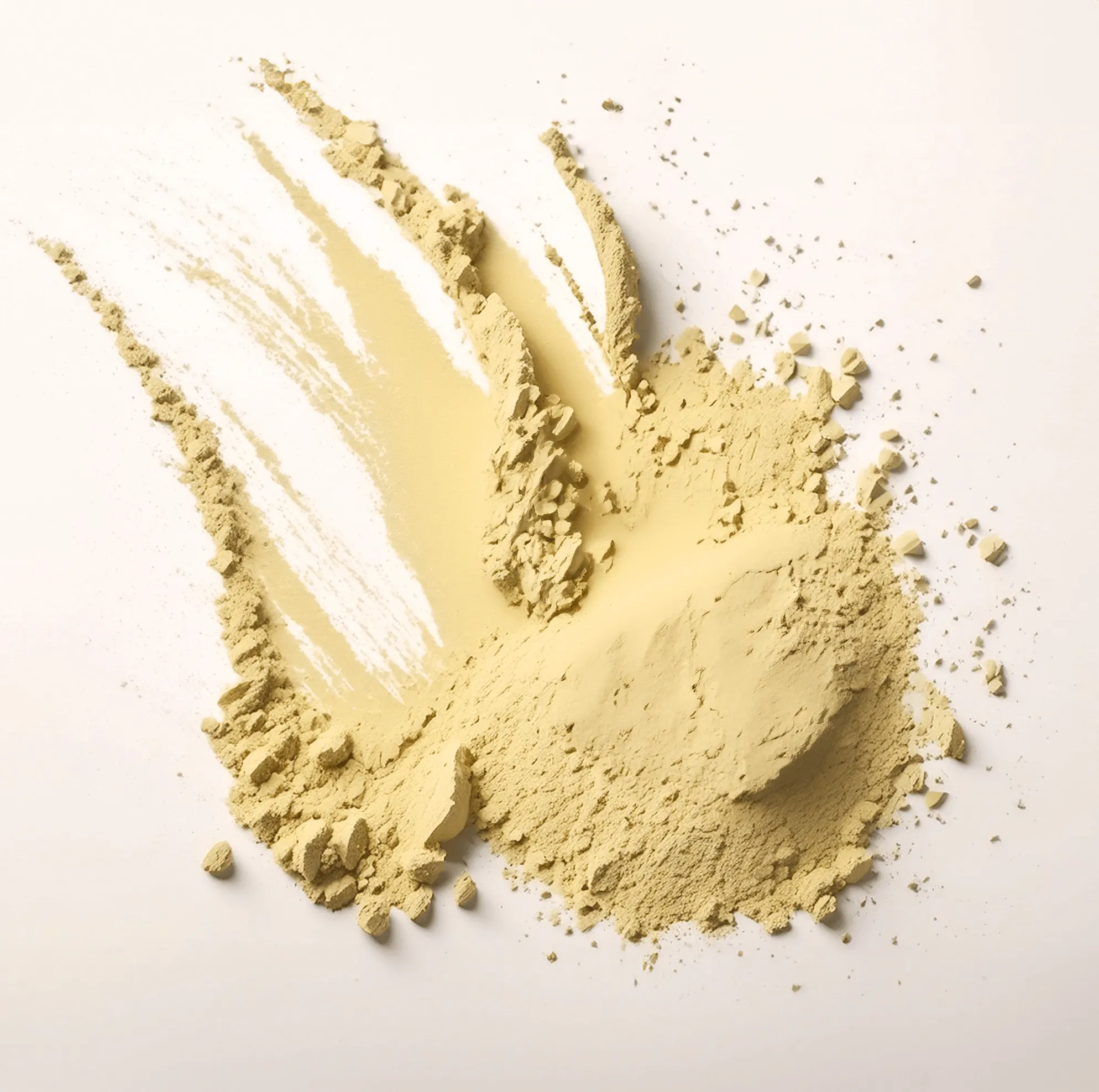
Natural citrus powders have a simple value proposition for beverage formulators: replace artificial citrus flavor, replace synthetic vitamin C co-fortification, and get a clean ingredient label declaration, all from a single ingredient. The procurement question is how the powders compare across suppliers, what concentrations to expect, and which carrier system works for your application.
Use rate
The use rate is the spec that drives cost-per-serving math. The less powder you need for the same flavor intensity, the lower your cost per finished unit, and that is what to compare across suppliers.
Our citrus and tropical line breaks down as follows:
| Powder | Botanical name | First ingredient | Use rate |
|---|---|---|---|
| Lime Powder | Citrus latifolia | Lime juice | 1% |
| Lemon Powder | Citrus limonia | Lemon juice | 1% |
| Orange Powder | Citrus sinensis | Orange juice | 2% |
| Pineapple Powder | Ananas comosus | Pineapple pulp | 2% |
The practical translation: at a 1% use rate, 10 kg of lime or lemon powder flavors 1,000 kg of finished beverage. At 2%, you need twice as much. Understand your target inclusion rate before calculating landed cost comparisons with liquid citrus flavors or lower-concentration alternatives.
Lime and lemon carry the fruit as the first ingredient and reach target intensity at half the inclusion of orange and pineapple. Ask any supplier for the ingredient statement and the recommended use rate together. One without the other tells you very little.
The carrier system matters for your label
Most spray-dried citrus powders on the market use maltodextrin as the carrier. Maltodextrin works well from a processing standpoint, but it shows up on your ingredient label and it's increasingly scrutinized by natural channel retailers and clean-label consumers.
The powders we carry use different carriers depending on the fruit:
- Lime powder: Acacia gum stabilizer. Acacia gum is a natural soluble fiber with recognized prebiotic properties. It's already used as an emulsifier and fiber ingredient in functional beverages. Carrying it in the flavor powder means you're getting double-duty from a single ingredient on your label.
- Orange and pineapple powders: Prebiotic fiber carrier. This adds a gut health co-benefit angle to finished products in the functional food and beverage space.
- Lemon powder: Modified corn starch carrier. Conventional, reliable, and widely used in food manufacturing.
For natural channel and clean-label positioning, the acacia gum and prebiotic fiber carriers keep the ingredient declaration recognizable without sacrificing processing performance.
Independent performance data
An independent technical applications study (DID-R71, September 2025) evaluated the line against a leading industry benchmark supplier on three parameters: water activity, flavor intensity, and flowability.
Water activity (Aw): Our powders came in lower across the line. Lower water activity translates directly to better shelf stability and lower microbiological risk. This matters at two points: your bulk ingredient storage, and the finished beverage's stability over its shelf life. Tighter Aw specs give you more margin on storage conditions and reduce spoilage risk in tropical or variable-humidity distribution environments.
Flavor intensity: A trained 10-panelist sensory evaluation using the Spectrum methodology (0-15 scale) found higher scores for our lime, orange, and pineapple powders on sweetness, acidity, and authentic fruit character. Panelist descriptions consistently included "more natural and authentic" relative to the benchmark. The lemon powder was evaluated comparably on intensity with a notably warmer color profile due to its higher carotenoid content.
Flowability: Hausner Index results were comparable between suppliers, so industrial handling performance is equivalent.
The flavor intensity finding has a direct formulation implication. If you can achieve your target flavor profile at a lower inclusion rate because the powder is more concentrated and more intense, your cost-per-serving decreases even if the per-kg price is comparable. Model both variables before finalizing a supplier comparison.
What to evaluate when sourcing citrus powder
A practical checklist for your procurement process:
- The ingredient statement and the use rate together: the efficiency driver. A lower use rate is more cost-effective per serving.
- Carrier system: check against your label requirements and retailer compliance standards before committing.
- Water activity specification: a direct indicator of shelf stability and microbiological headroom.
- Sensory data at target use rate: third-party study data helps, but bench testing in your own matrix is the only definitive answer. Request samples early.
- Documentation availability: COA, TDS, allergen statement, and Prop 65 compliance should be available before your first production run.
- Sample availability in development quantities: Confirm your supplier can ship quickly without a minimum order commitment.
Where these powders fit in the product line
Each powder has its own strongest application fit based on flavor profile, color, and carrier:
Lime powder (Citrus latifolia, lime juice first, acacia gum stabilizer): RTD beverages, electrolyte and hydration formulas, powdered drink mixes, and any application where a clean, bright citrus note is the target. Lime pairs particularly well with tropical and botanical flavors in complex beverage systems. The acacia gum is a natural fit for brands already using gum acacia elsewhere in their formulation.
Lemon powder (Citrus limonia, lemon juice first, modified corn starch carrier): Citrus-forward RTDs, immune supplement flavoring, and applications where a warmer amber-orange visual contribution is a benefit rather than a liability. The higher carotenoid content distinguishes it from standard lemon powders on the market. It's the right choice when your formula benefits from a naturally warm hue.
Orange powder (Citrus sinensis, 60% juice, prebiotic fiber carrier): Immune formulas, children's nutrition products, functional food flavoring, and applications where the prebiotic fiber carrier adds a label-forward co-benefit. The vivid orange color profiles well in powdered drink mixes. The DID-R71 study rated it highest among the line on overall flavor intensity relative to benchmark.
Pineapple powder (Ananas comosus, 60% pulp, prebiotic fiber carrier): Tropical beverage blends, smoothie powder systems, and functional food flavoring. It also carries naturally occurring bromelain, which opens a secondary market in digestive enzyme supplement formulas and post-workout recovery products.
All four powders available for sampling.
Lime, lemon, orange, and pineapple powder available for sampling. Technical documentation and sensory study data on request.
Request a Sample