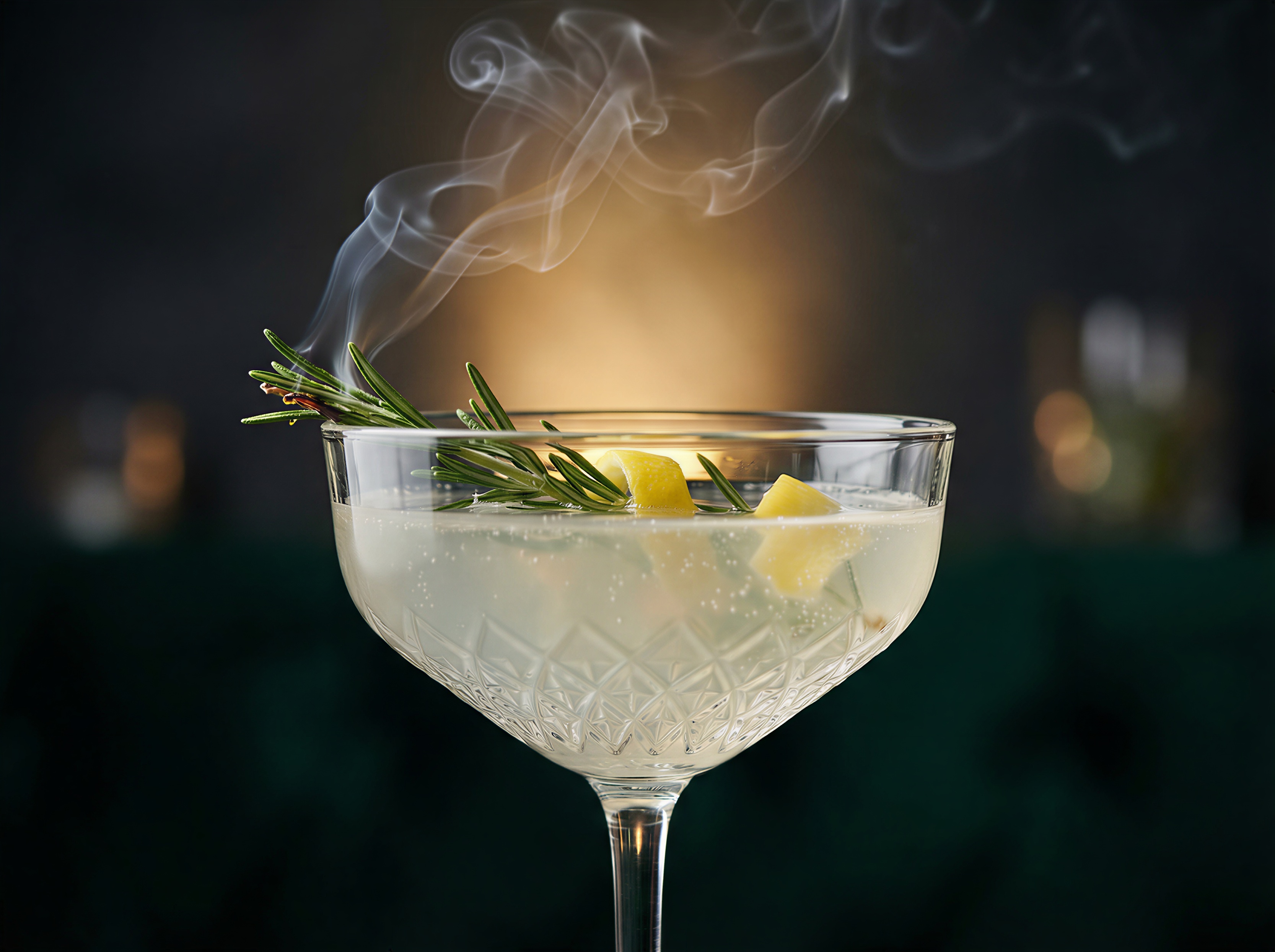
Non-alcoholic aperitifs and botanical RTDs have a formulation problem built into the category. The flavor compounds that define them (terpenes, essential oils, botanical extracts) are oil-soluble. They don't want to stay in a water-based beverage. Getting them there, and keeping them there through shelf life, is an emulsification challenge. Gum acacia is the most common natural solution.
Three functional roles
Gum acacia does three things in NA botanical beverages, and they're all useful.
Emulsification. Botanical extracts and essential oils are oil-soluble. Gum acacia creates stable oil-in-water emulsions that hold through temperature cycling, low pH, and the product's shelf life. This is the primary technical function.
Natural clouding. A gum acacia-emulsified botanical extract produces the natural haze associated with premium botanical beverages. This is different from synthetic clouding agents. The turbidity is the visual signal of actual botanical content, not an artificially opaque additive. Many NA aperitif brands lean into this. The natural cloudy appearance is part of the premium positioning.
Mouthfeel contribution. At 1–5% in the finished beverage, gum acacia adds body without changing the flavor profile. This addresses the thin, watery sensation that's endemic to NA beverages. More on this specific topic in the mouthfeel article linked in the sidebar.
Species selection depends on the application
Most NA beverage formulators are adding gum acacia for mouthfeel and body, not to build a flavor emulsion concentrate. That distinction matters for grade selection.
For mouthfeel applications, Acacia seyal works well. At the use levels typical for body and lubricity in a finished beverage (1–5%), seyal grades perform reliably and integrate cleanly in production. Most NA beverage brands we work with are running seyal.
For botanical oil emulsification, Acacia senegal has a meaningful advantage. The AGP fraction is higher in senegal, which translates to better film formation at the oil-water interface and more durable emulsion stability at the acidic pH typical of botanical aperitifs (pH 3.0–4.5 is common). If the formula calls for a stable oil-in-water emulsion of botanical extracts or essential oils, senegal grades are the better starting point.
Many NA beverage formulas require both: some botanical emulsification and mouthfeel contribution from a single ingredient. In those cases, senegal covers both functions. But if mouthfeel is the primary goal and there's no demanding emulsification requirement, seyal is a practical choice.
Grade selection
Type 4880 is the agglomerated, fast-hydrating seyal — the practical starting point for mouthfeel-focused NA beverage work. When emulsification is also in scope, senegal grades are the better fit. Type 4810 (agglomerated, fast-hydrating) is preferred in production environments where hydration time matters; Type 4687 (standard spray-dried) works well at any scale. For organic-certified products, Type 4886 is the agglomerated senegal with Oregon Tilth certification.
Certification considerations
The NA botanical beverage category skews natural and organic. Gum acacia fits that positioning well: it's a plant-derived, single-ingredient solution whether you're using it for mouthfeel or emulsification. All grades are Kosher and Halal certified. The organic-certified version (Type 4886) is in stock for brands that need NOP documentation.
Grade guidance for NA botanical beverages
Type 4880 (seyal) for mouthfeel-focused formulas. Types 4687, 4810, and 4886 (senegal, Oregon Tilth certified) when emulsification is also in scope. Samples and technical data on request.
Request a Sample