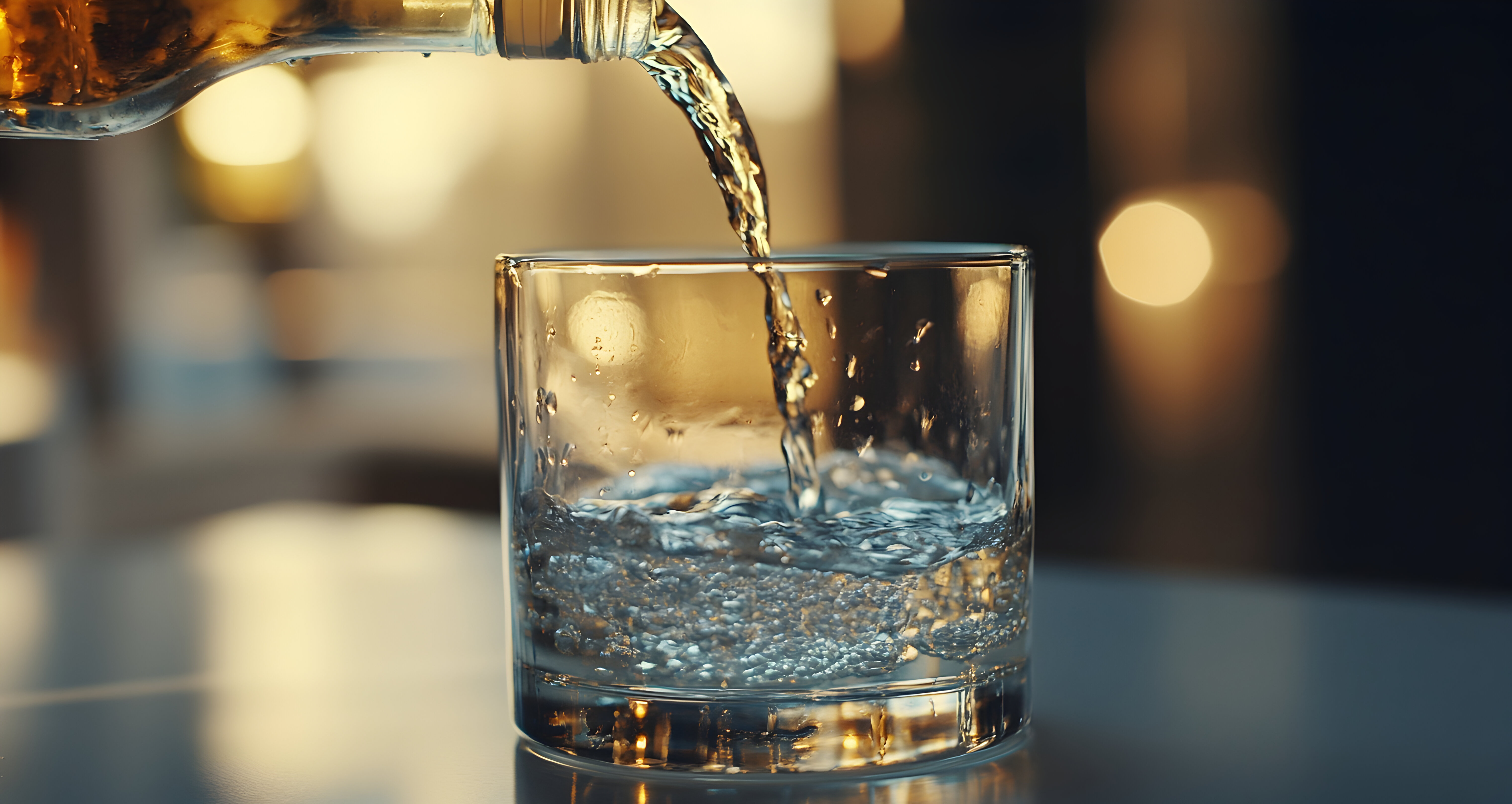
Alcohol does a lot of textural work in a beverage. Ethanol at 5–14% raises viscosity noticeably, creates a warmth sensation in the throat, and coats the palate in a way water doesn't. Remove it and you're left with a formulation gap that no single ingredient fills perfectly. But gum acacia addresses a meaningful part of it.
What mouthfeel means in this context
Mouthfeel in a beverage is a combination of three things: viscosity (body and weight), lubricity (coating and smoothness), and temporal profile (how long the sensation lasts). Beer has mouthfeel. A standard carbonated soft drink mostly doesn't. The NA beverage market, particularly the premium botanical aperitif and zero-proof spirit segment, is actively trying to close that gap.
The problem is formulation-specific. Botanical aperitifs are typically low-calorie, lightly sweetened, and acidic. The ingredients that would solve the mouthfeel problem most efficiently (sugar, glycerol, gum systems at high doses) tend to compromise the light, crisp profile these products are designed to have.
The toolkit formulators use
Viscosity builders: Xanthan gum, guar gum, locust bean gum. These add measurable body but can make beverages feel heavy or slick at the use levels needed to move the needle on mouthfeel. Xanthan at 0.02–0.05% adds viscosity without a perceivable texture in most beverages. Higher doses start to create a mucilaginous quality that doesn't read as premium.
Emulsifiers: Gum acacia, lecithin, quillaia saponins. These create colloidal structures in the beverage that affect perceived texture differently from viscosity builders. The effect is softer: more lubricity and body than a pure water-based solution, without the slick or heavy quality of high-dose hydrocolloids.
Tannins and polyphenols: Tea tannins, grape tannins, botanical bitters. These add astringency and a drying sensation that mimics some aspects of wine structure: the puckering quality of a dry red. They don't add body, but they add complexity and a perception of substance.
Carbonation adjustment: Higher CO2 pressure creates more tactile stimulation on the palate, which partially compensates for low body. It doesn't add mouthfeel directly but increases the overall sensory intensity of the beverage.
Most good NA beverage formulas use several of these together. Gum acacia tends to be part of the solution because it does double duty: emulsification and mouthfeel contribution from a single natural ingredient.
Gum acacia's specific contribution
At 1–5% in finished beverage weight, gum acacia adds a mild lubricity and body that is qualitatively different from a viscosity builder. It doesn't make beverages thick. It makes them feel less thin. The distinction is practical: 3% gum acacia in a botanical aperitif doesn't change the texture the way even a small amount of xanthan would. The sensation is subtler: a slight coating quality and a perception of substance that wouldn't be there without it.
The mechanism is the arabinogalactan-protein complex. At concentrations above about 1%, the AGP fraction creates a soft colloidal network that contributes to lubricity on the palate surface. It's the same property that makes gum acacia effective as a beverage emulsifier: the protein-polysaccharide interaction at interfaces.
Combining gum acacia with xanthan
One of the more effective mouthfeel systems for NA beverages combines low-dose xanthan with gum acacia. Xanthan at 0.02–0.05% builds structure and viscosity. Gum acacia at 2–4% softens the xanthan texture and adds lubricity. The result is a smoother, more balanced body than either ingredient produces alone.
This combination also keeps both ingredients at lower individual doses, which avoids the slick quality that higher-dose xanthan can produce and keeps the label readable: two recognizable natural ingredients rather than a long hydrocolloid list.
Grade selection
For pure mouthfeel applications, Acacia seyal is a good fit. Most NA beverage formulators adding gum acacia for body and lubricity (not to build a flavor emulsion) are running seyal, and it works well. When gum acacia also needs to emulsify botanical oils, senegal is the right choice.
Type 4880 is the agglomerated, fast-hydrating seyal — the standard starting point for mouthfeel-focused NA beverage work. When emulsification is also in scope, senegal grades (Types 4687, 4810, or 4886) are the better fit. Type 4810 is the fast-hydrating option; Type 4886 is Oregon Tilth certified organic for brands with NOP requirements.
Grade guidance for NA beverage mouthfeel
Type 4880 (seyal) for mouthfeel-focused formulas. Types 4687, 4810, and 4886 (senegal, Oregon Tilth certified) when emulsification is also in scope.
Request a Sample