Bulk and wholesale supply
PAT Ingredients supplies coconut MCT oil powder from US inventory at 50% and 70% oil load, in conventional and organic grades. The carrier is gum acacia, which declares on label as soluble fiber. Organic grades carry Oregon Tilth NOP certification, and Parve Kosher certification is through KOF-K.
Conventional 50% packs 25 kg bags to a drum, 400 kg per pallet. Organic packs in 20 kg cases at both oil loads. Samples ship on request, and pack sizes and production minimums are on the bulk supply page.
Request a SampleWhat coconut MCT oil powder is
MCT stands for medium chain triglycerides. In coconut oil, the medium-chain fatty acids are predominantly caprylic acid (C8) and capric acid (C10). MCT oil is fractionated coconut oil: the long-chain fatty acids are removed during processing, leaving a concentrated C8/C10 fraction. The result is a clear, odorless oil with a lower melting point than coconut oil and a fatty acid profile that is rapidly absorbed compared to long-chain fats.
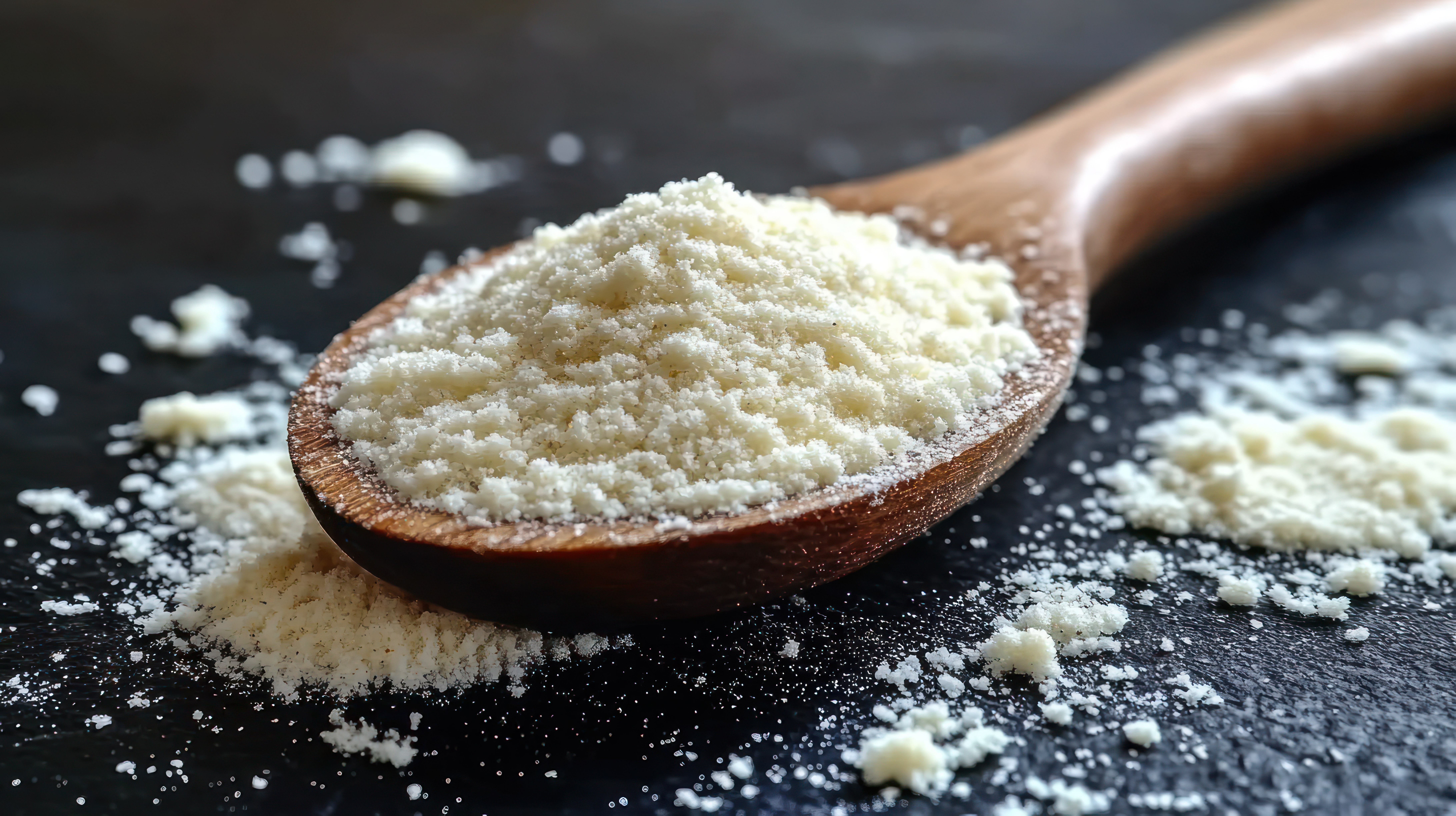
MCT oil powder is produced by spray-drying: the liquid oil is emulsified with a carrier, then atomized into a heated chamber. The water evaporates almost instantly, leaving the oil enclosed within a dry powder matrix. The result is a free-flowing, shelf-stable powder that blends directly into dry formulations and disperses cleanly in water-based systems without any liquid handling equipment.
It is not the same product as powdered coconut oil. Powdered coconut oil contains the full fatty acid profile of coconut oil, including lauric acid (C12) and long-chain saturated fats. Coconut MCT powder is a concentrated C8/C10 product: more specifically ketogenic, more rapidly absorbed, and a different ingredient for regulatory and label purposes.
50% vs. 70% oil load: what the difference means for your formula
The oil load percentage is how much MCT oil is present per gram of finished powder. At 50%, half the powder weight is oil and half is carrier. At 70%, seven-tenths of each gram is oil.
The practical difference is dosing efficiency. A 10g serving of 50% powder delivers 5g of MCT oil. The same serving of 70% powder delivers 7g. If the formula targets a specific MCT dose within a fixed serving size, the higher oil load gets there with less total powder, useful for capsules and sachet formats where total fill weight is constrained.
The tradeoff is handling. Higher oil load means less carrier per gram of oil, which leaves less room for moisture uptake before the powder becomes sticky or clumpy. Both versions are stable under standard storage conditions (cool, dry, sealed), but 50% is more forgiving in most manufacturing environments. For beverage applications and general dry blending where total MCT dose per serving is flexible, 50% is typically the practical choice. For targeted-dose supplement formats, 70% earns its place.
Both load rates are available in conventional and organic grades.
Why the carrier matters
Most commercial MCT oil powders use maltodextrin as the carrier. It is effective and inexpensive, but it adds a rapidly digested starch that raises the glycemic load of the finished product.
PureAcacia products use gum acacia instead. Gum acacia is 90% soluble prebiotic dietary fiber. It contributes to the finished product's dietary fiber content, has no meaningful glycemic impact, and feeds beneficial gut bacteria in the colon. On the label, it reads as "gum acacia" or "acacia fiber". For brands selling into natural grocery, Whole Foods, or specialty supplement retail, the carrier choice is visible on the label.
The encapsulation performance is comparable to maltodextrin. Gum acacia forms a robust oxygen-barrier shell around the oil droplets, protecting against oxidation and maintaining flavor integrity over the product's shelf life. Dispersibility in cold and hot water is good at both oil load rates.
US manufacturing: what it means for procurement
PureAcacia MCT oil powders are manufactured in the United States.
Lead times are shorter. There is no ocean freight, no port transit, no customs clearance. Domestic production supports faster replenishment and a simpler inventory model, particularly for brands working with smaller initial orders before scaling.
Documentation is simpler. US-manufactured finished ingredients have clean country-of-origin documentation for FDA-regulated products, without the layered import paperwork that comes with offshore production.
Supply chain traceability is tighter. The ingredient chain for PureAcacia powders is short: coconut MCT oil and gum acacia. Two ingredients, both with established US supplier relationships, both with current specifications and certifications.
Documentation for each lot
Each commercial lot ships with a standard document package. For supplier qualification and regulatory review:
Certificate of Analysis: Identity confirmation, moisture, oil load, peroxide value (oxidative status), and microbiological results (total aerobic count, yeast and mold, absence of pathogens). Issued for each production lot.
Allergen statement: Refined coconut MCT oil does not carry the protein fraction responsible for coconut allergy. Under FALCPA, refined oils are exempt from the allergen labeling requirements that apply to whole coconut and unrefined coconut products. An allergen absence statement is available with each shipment.
Non-GMO statement: Available on request.
Organic certificate (organic lots only): Oregon Tilth NOP certificate covering the handling operations. Both the MCT oil and the gum acacia carrier are certified organic. Current certificate available through the Documentation Portal for registered buyers.
Frequently asked
What is coconut MCT oil powder?
Spray-dried medium chain triglycerides (C8 and C10 fatty acids) derived from coconut oil, encapsulated in a dry carrier. PureAcacia products use gum acacia as the carrier. The powder form delivers the nutritional benefits of MCT oil without liquid handling, with extended shelf life and direct blendability into dry supplement and food formulations.
What is the difference between 50% and 70% MCT oil powder?
The percentage is the oil load: how much MCT oil is present per gram of finished powder. At 50%, 10g of powder delivers 5g of oil. At 70%, 10g delivers 7g. Higher oil loads allow more efficient MCT dosing in fixed serving sizes, but are more sensitive to storage humidity and handling conditions. Both are available in conventional and organic grades.
Is coconut MCT oil powder the same as powdered coconut oil?
No. MCT oil powder is made from fractionated coconut oil, concentrating the C8 and C10 fatty acids and removing the long-chain fractions. Powdered coconut oil contains the full fatty acid profile of coconut oil. They are different products with different fatty acid compositions, different labels, and different functional roles in formulation.
How is MCT oil powder made?
The liquid MCT oil is emulsified with gum acacia, then atomized through a spray dryer into a hot air stream. The water evaporates almost instantly, enclosing the oil within a dry powder matrix. The finished powder is free-flowing, shelf-stable, and disperses cleanly in water-based systems.
Does coconut MCT oil powder contain allergens?
Refined coconut MCT oil does not carry the allergenic protein from coconut. Under FALCPA, refined oils are exempt from allergen labeling requirements. An allergen absence statement is included with every commercial shipment.
Is organic coconut MCT oil powder available?
Yes. Both 50% and 70% oil load versions are available in USDA Organic certified grades. The MCT oil and gum acacia carrier are both certified organic, produced under PAT Ingredients' Oregon Tilth NOP certification. The current certificate is available for registered buyers through the Documentation Portal.
Coconut MCT oil powder from US stock
50% and 70% oil load, conventional and organic. Full documentation on every lot. Samples available. Pack sizes, stock and custom production minimums are on the bulk supply page.
Request a Sample