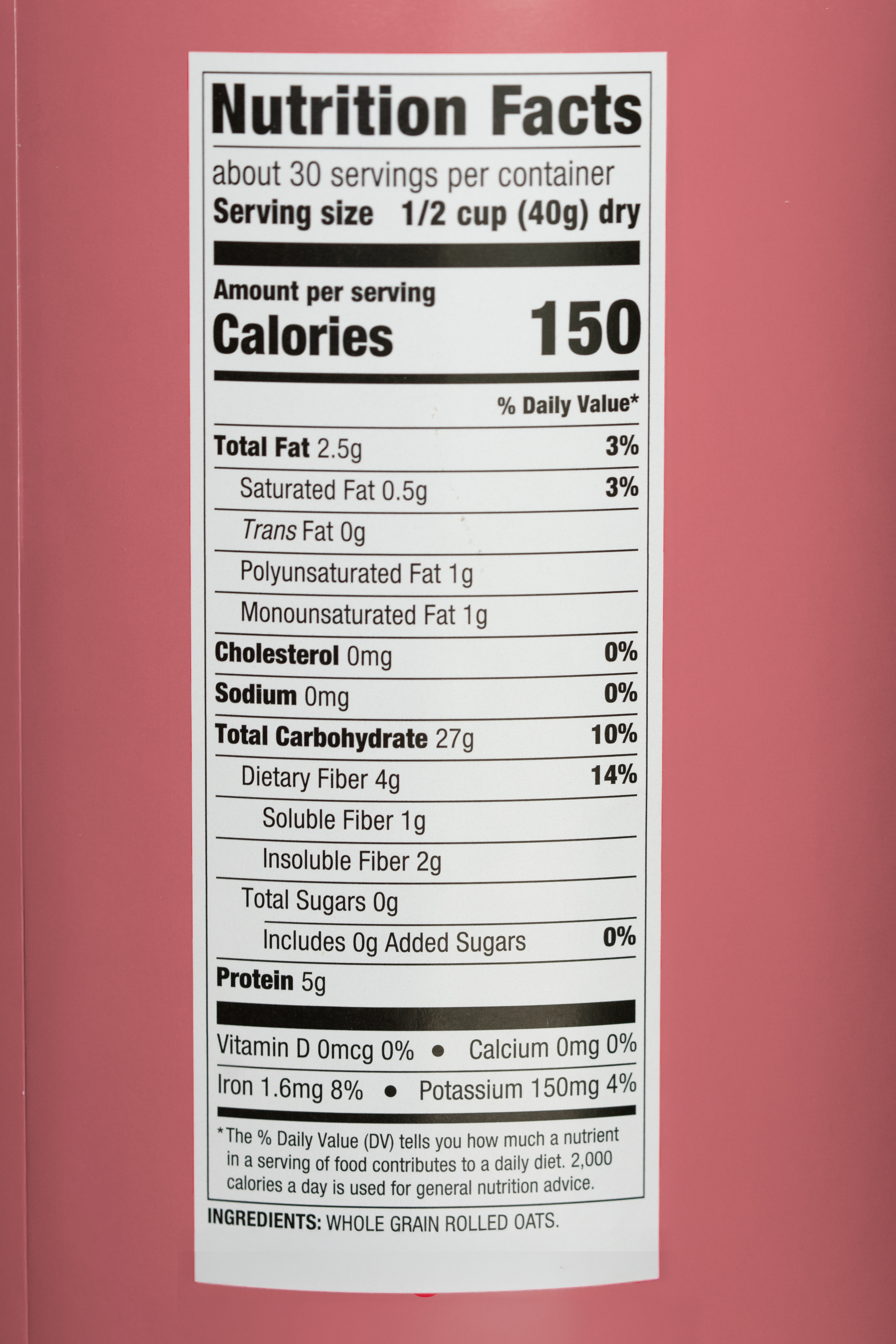
In 2016, FDA updated the Nutrition Facts label requirements and revised the definition of dietary fiber. The change had practical implications for ingredient suppliers and food manufacturers: not all non-digestible carbohydrates automatically qualify for the Dietary Fiber line on the Nutrition Facts panel anymore.
Gum acacia does. Here's what that means and why it matters.
The 2016 FDA dietary fiber definition
Under FDA's current rules, dietary fiber includes non-digestible soluble and insoluble carbohydrates, and lignin, that have physiologically beneficial effects in humans. The rule created two pathways for an ingredient to qualify as dietary fiber on the Nutrition Facts panel.
The first pathway is the "naturally occurring" category: fiber that is inherent and intact in whole foods (intact oats, whole wheat, etc.) qualifies automatically.
The second pathway is for isolated or synthetic non-digestible carbohydrates: these must either appear on FDA's positive list, or be submitted to FDA for review and approval. Ingredients not on the positive list need to demonstrate a beneficial physiological effect on human health before FDA will recognize them as dietary fiber.
Gum acacia is on the positive list
Gum acacia (listed as "gum arabic" in the regulation) is explicitly included on FDA's positive list of isolated or synthetic non-digestible carbohydrates that qualify as dietary fiber under 21 CFR 101.9(c)(6)(i).
This means gum acacia does not need to petition FDA or separately demonstrate beneficial physiological effects. It qualifies as dietary fiber for Nutrition Facts panel purposes without any additional regulatory action on the part of the manufacturer using it.
Other ingredients on the positive list include beta-glucan soluble fiber, psyllium husk, cellulose, guar gum, pectin, locust bean gum, and hydroxypropylmethylcellulose (HPMC). Several well-known prebiotic fibers (including inulin, FOS, and resistant starch) were not on the original positive list and required FDA determinations before they could be labeled as dietary fiber.
What this means for the Nutrition Facts label
If your product contains gum acacia, the gum acacia content counts toward the Dietary Fiber line on the Nutrition Facts panel. A product with 10g of gum acacia per serving can declare 10g dietary fiber. A beverage with 5g of gum acacia per 12 fl oz serving can claim "good source of fiber" (10–19% Daily Value) under FDA's content claim rules.
This is a labeling classification, not a health claim. No additional substantiation or FDA notification is required to make the fiber content declaration based on gum acacia content.
GRAS status
Gum acacia is also Generally Recognized as Safe (GRAS) per 21 CFR 184.1330. This covers its use in food within customary use levels and means no pre-market approval is needed for its inclusion in food products. The GRAS determination is separate from the dietary fiber classification but equally important for regulatory clearance in the US market.
Label naming options
FDA allows gum acacia to be labeled as "gum arabic," "acacia gum," or "gum acacia" on ingredient declarations. All three names refer to the same ingredient and are acceptable.
"Acacia fiber" is increasingly used as a consumer-friendly alternate name, particularly in supplement and functional food contexts. This name is generally acceptable under FDA's common or usual name standard, though food manufacturers should confirm with their regulatory counsel before using it on regulated labels, as FDA has not issued specific guidance on "acacia fiber" as an approved alternate name.
Both species qualify
Acacia senegal and Acacia seyal both qualify as gum acacia under FDA's classification. The dietary fiber designation applies to both species. Either can be used for fiber labeling purposes on the Nutrition Facts panel.
Health claims vs. fiber labeling
There's a distinction between labeling fiber content and making health claims. The FDA dietary fiber classification allows manufacturers to count gum acacia toward the Dietary Fiber line on the panel. That's a nutritional fact declaration.
A separate question is whether a manufacturer can make structure/function or health claims about that fiber: statements like "supports digestive health" or "promotes regularity." These claims require separate substantiation under FDA's supplement and food labeling rules. The dietary fiber classification doesn't authorize those claims automatically. The prebiotic research base for gum acacia does support structure/function claims with appropriate substantiation, but that's a distinct process from Nutrition Facts labeling.
Practical implication
For manufacturers building fiber-forward products, acacia fiber is one of the cleanest fiber sources available under current FDA rules. It's on the positive list, it's GRAS, it's fully soluble, it's flavor-neutral at most use levels, and it carries a recognizable ingredient name. That combination is harder to find than it looks.
Grade guidance for fiber-fortified products
Both senegal and seyal species qualify for FDA dietary fiber labeling. Conventional and Oregon Tilth certified organic grades available. Technical documentation available on request.
Request a Sample