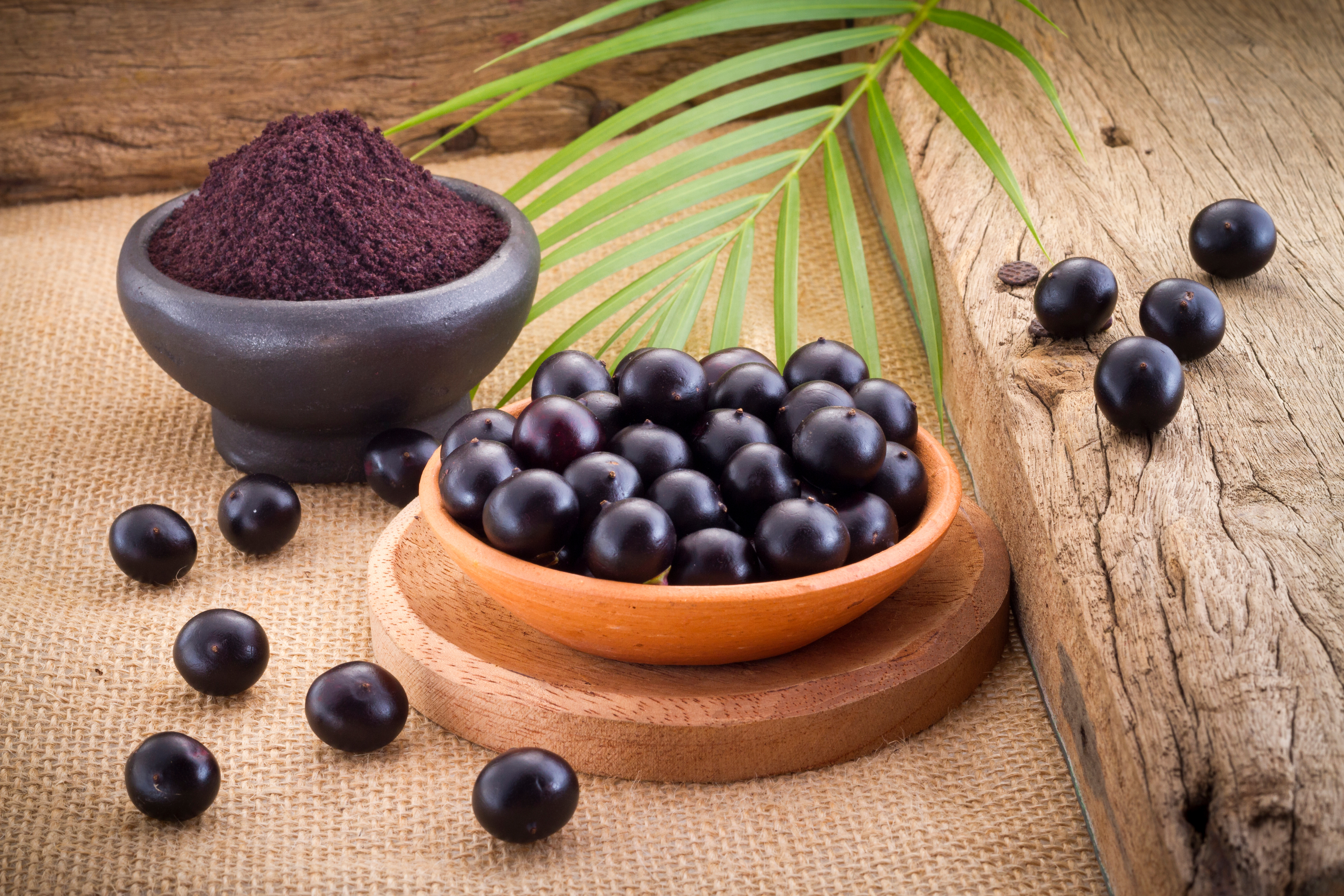
Acai (Euterpe oleracea) is a small dark purple berry harvested from palm trees native to the Amazon basin of Brazil. It entered the global nutrition market on the strength of its antioxidant content and has since established itself as a permanent fixture in sports nutrition, weight management, and general wellness supplement categories. Understanding the chemistry behind the acai story and the formulation options available is the starting point for effective use of this ingredient.
Nutritional profile and bioactive content
Anthocyanins: acai contains among the highest concentrations of anthocyanins of any commonly consumed fruit. These flavonoid pigments are responsible for the deep purple color and the antioxidant activity measured by ORAC assays. The primary anthocyanins in acai are cyanidin-3-glucoside and cyanidin-3-rutinoside.
Healthy fats: unlike most fruits, acai has significant lipid content (approximately 32% of dry weight in whole berry form) dominated by oleic acid (omega-9) and palmitic acid, a profile similar to olive oil.
Dietary fiber: acai is a meaningful fiber source, contributing to satiety and digestive health positioning.
Powder and extract forms
Freeze-dried whole berry powder preserves the full nutritional profile including lipids, anthocyanins, and fiber. Used in smoothie powders, functional food applications, and capsule supplements.
Spray-dried extract concentrates the anthocyanin content relative to whole berry powder at a lower inclusion rate. Suitable for tablet and capsule supplements where dosage precision and shelf stability are priorities.
Standardized extracts specify a minimum anthocyanin content, typically 6–25% by weight, providing formulators with a consistent, auditable input for products making antioxidant claims.
Formulation considerations
Acai's anthocyanin content is pH-sensitive: the characteristic purple color is stable at acidic pH and shifts toward blue or brown at neutral to alkaline pH. Formulations should account for this, particularly for beverages and dairy applications where pH can vary.
The lipid content of whole berry powders reduces shelf life under humid or warm storage conditions. Nitrogen-flushed packaging and storage below 65°F are recommended for bulk ingredient storage.
PAT supplies acai and functional fruit powders from Nutreo
Contact us to discuss grades, specifications, and availability.
Request a Sample